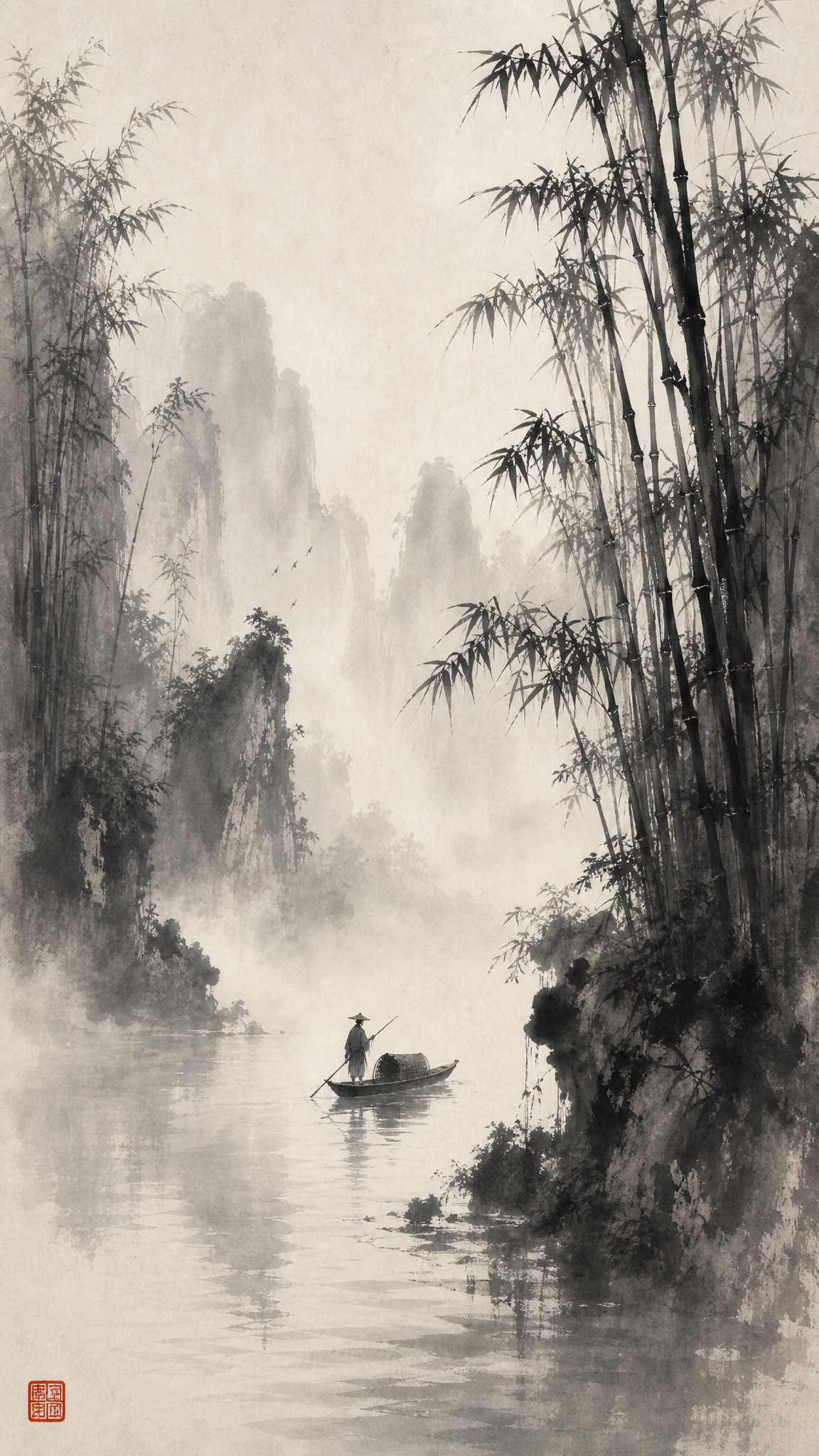
#Chinese Ink
Chinese ink wallpapers adapt the brush-based logic of East Asian ink painting into digital backgrounds built on wash, brush pressure, empty space, and meditative restraint. Instead of dense visual filling, the style often relies on atmosphere, negative space, mountain-and-water motifs, bamboo, birds, rock forms, or calligraphic brush energy. It creates wallpapers that feel contemplative, refined, and materially grounded even when digitally generated.
Acerca del arte de Chinese Ink
Chinese ink painting is deeply bound to the materials and discipline of brush, ink, paper or silk, and calligraphic movement. Britannica highlights ink as the basic medium and stresses that the absorbent surface allows no erasure, requiring confidence, speed, and technical control. The Metropolitan Museum of Art's essay on Chinese painting emphasizes the tradition of integrating painting with calligraphy and poetry and the idea of 'reading a painting' rather than merely glancing at it. For wallpaper design, that heritage translates into brush-led composition, negative space, and calm visual breathing room rather than dense illustrative finish.
Rasgos visuales
- Black, gray, and diluted ink value variation instead of full-spectrum saturation
- Expressive brushstroke width changes and calligraphic energy
- Large negative space used as active composition rather than emptiness
- Mist, water, mountain, bamboo, branch, stone, or bird motifs
- Soft wash gradation paired with sharper brush-defined accents
- A restrained palette, occasionally with a small red seal-like accent
- Atmospheric depth created by fade, spacing, and tonal layering
- A contemplative rather than decorative or loud visual rhythm
- Compositions that feel read, not just looked at
- Balance between disciplined control and spontaneous brush life
Casos de uso
Minimal, contemplative desktop wallpapers with strong negative space
Phone wallpapers for users who prefer calm and culturally rooted imagery
Study or writing environments where visual noise should stay low
Landscape or bamboo series intended for seasonal wallpaper packs
Wellness or meditation-adjacent visual themes that need real depth rather than generic softness
Estilos similares
Diferente de
Guía de prompt
Indicaciones para el prompt
- Name the tradition clearly: 'Chinese ink painting wallpaper' or 'shan shui ink wash landscape'
- Choose a restrained subject family such as mountain mist, bamboo, plum blossom, crane, riverbank, or scholar landscape
- Specify brush-and-wash behavior: 'calligraphic brushwork', 'soft ink wash', 'negative space composition'
- Ask for absorbent-paper feel, monochrome or near-monochrome values, and calm atmospheric spacing
- If you want a seal accent, mention a small cinnabar stamp-like detail but keep it secondary
Consejos
- Internal editorial suggestion: One dominant ink gesture plus broad negative space usually works better than many competing brush events.
- Internal editorial suggestion: Bamboo, mountains, cranes, and misty pines are the safest wallpaper-intent motifs.
- Internal editorial suggestion: Cross-link with `minimalist`, `line-art`, and `nature-inspired` helps users navigate intent.
- Internal editorial suggestion: Vertical compositions are especially strong on phone; panoramic mist landscapes work better on desktop.
Palabras clave recomendadas
Evitar
Errores comunes
- Overfilling the frame and losing the importance of negative space
- Producing generic grayscale fantasy art instead of brush-led ink logic
- Using blurry fog with no strong brush structure
- Adding too many colored accents and breaking the ink-painting discipline