#Cyberpunk
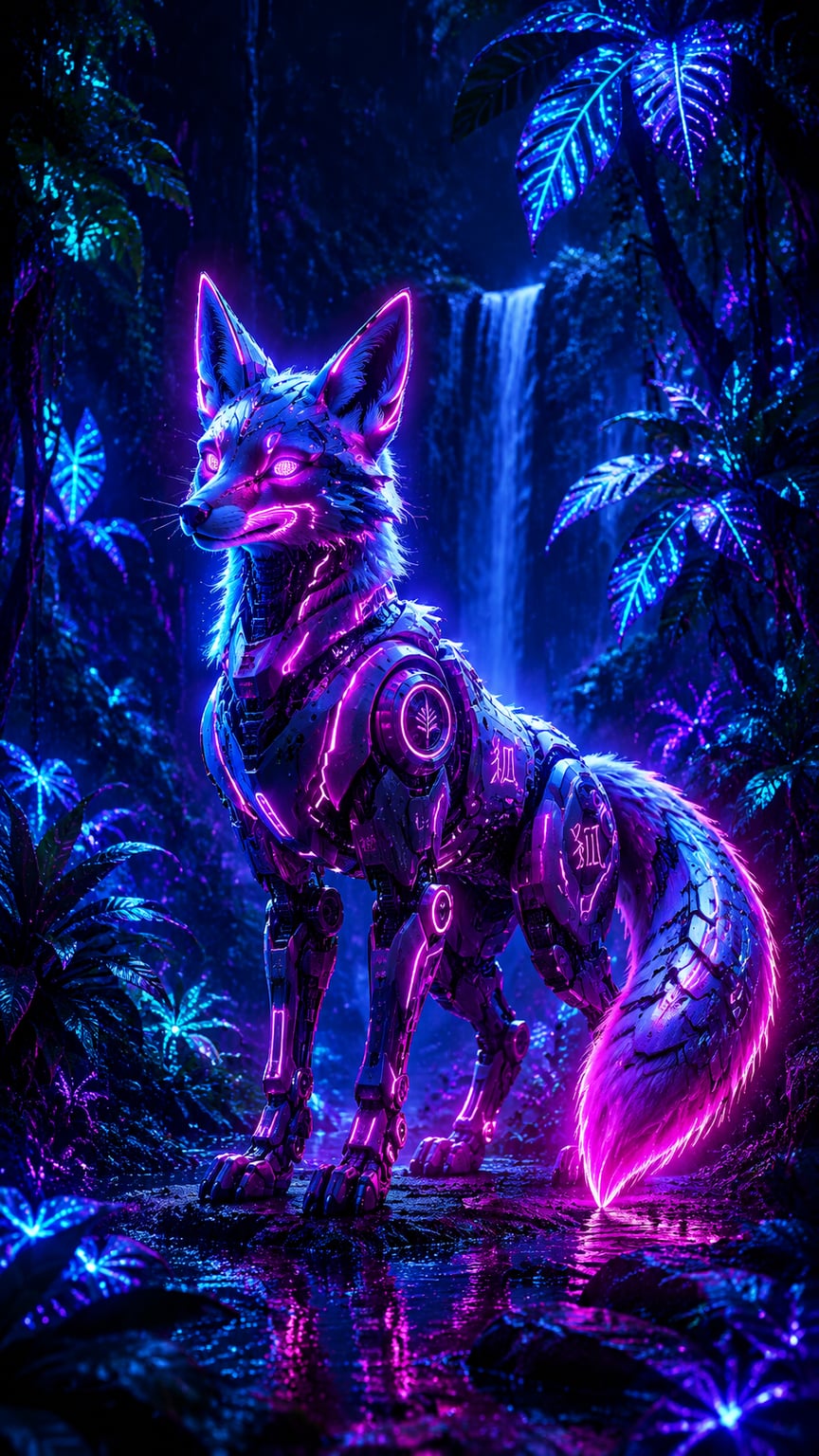
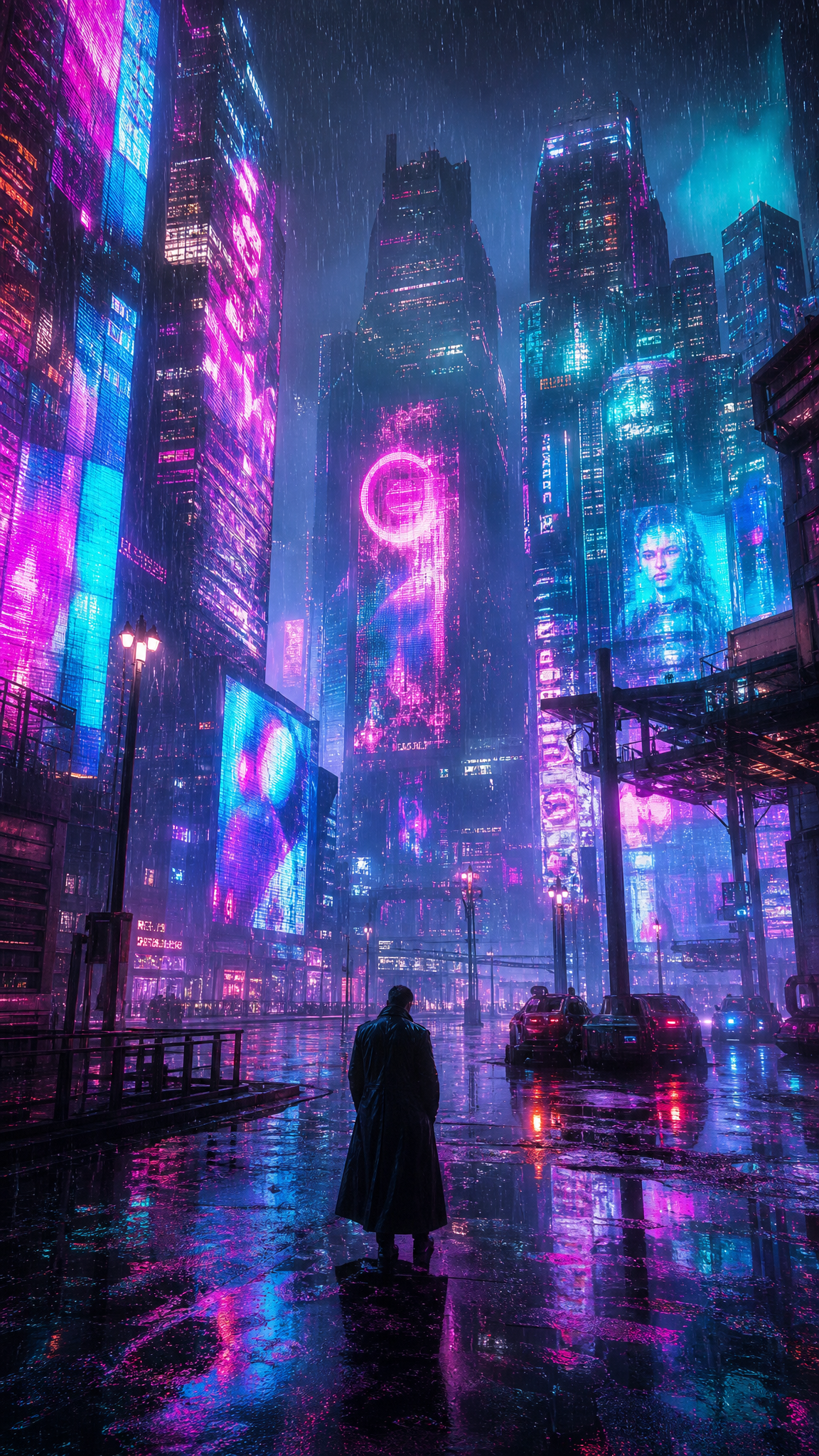
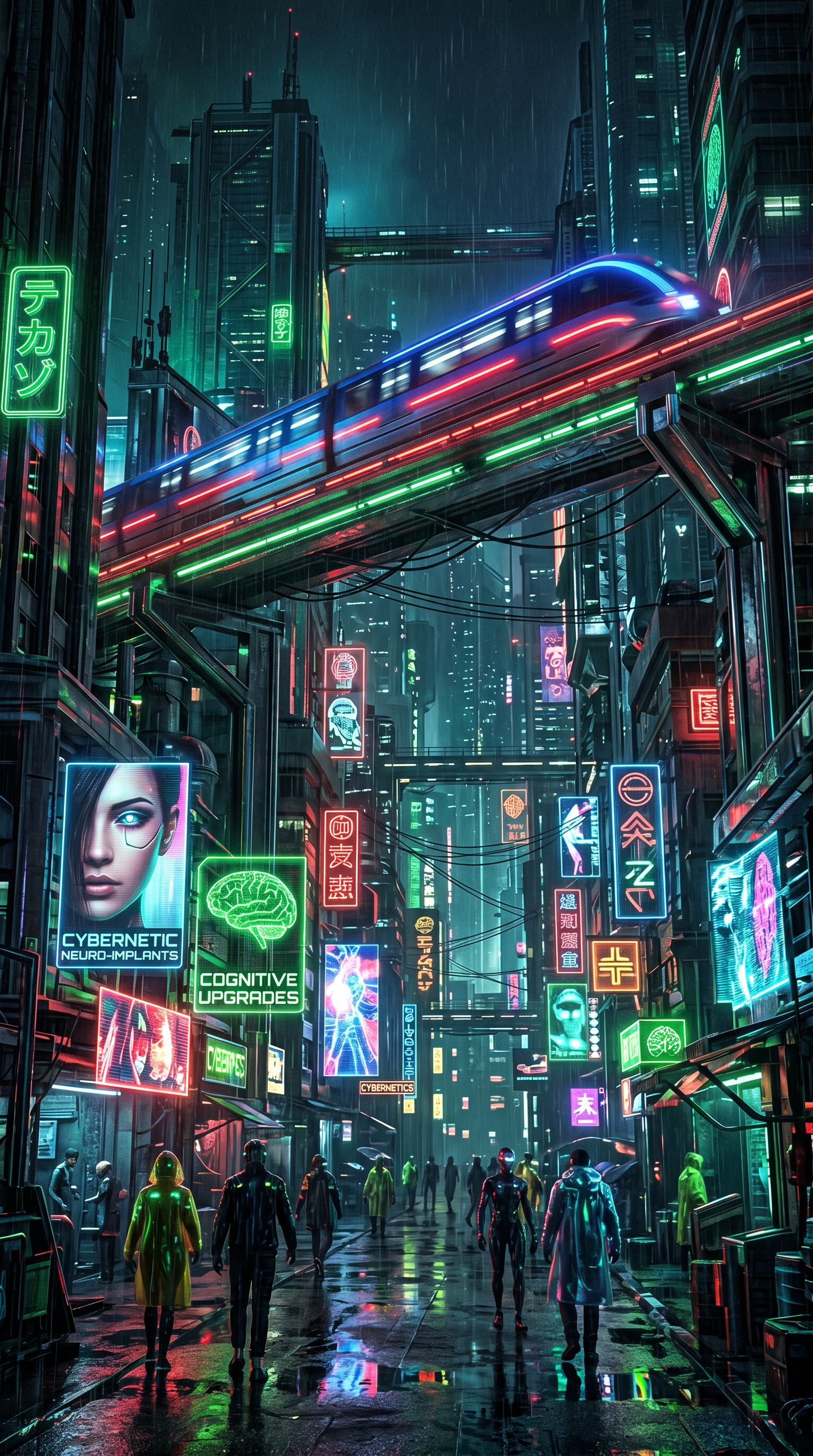
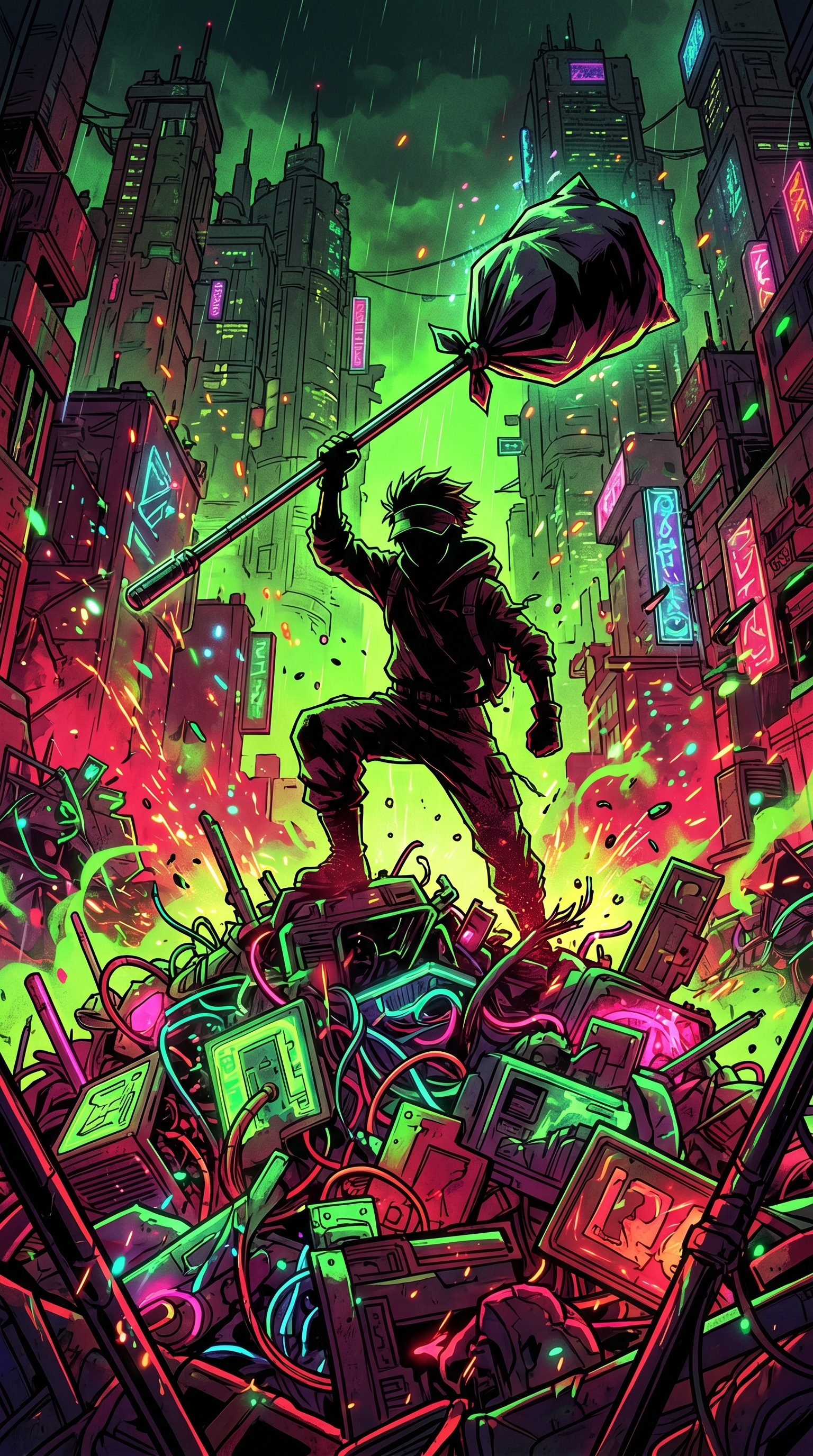
Cyberpunk is a science fiction-rooted visual aesthetic defined by the contrast of advanced technology and societal decay — 'high tech, low life.' Originating in early 1980s literature and cinema, the style is characterized by neon-lit dystopian cityscapes, rain-soaked streets, holographic signage, and dark atmospheres punctuated by vivid synthetic color. As a wallpaper style, cyberpunk delivers dramatic, moody compositions that pair naturally with dark-mode interfaces and RGB-lit setups.
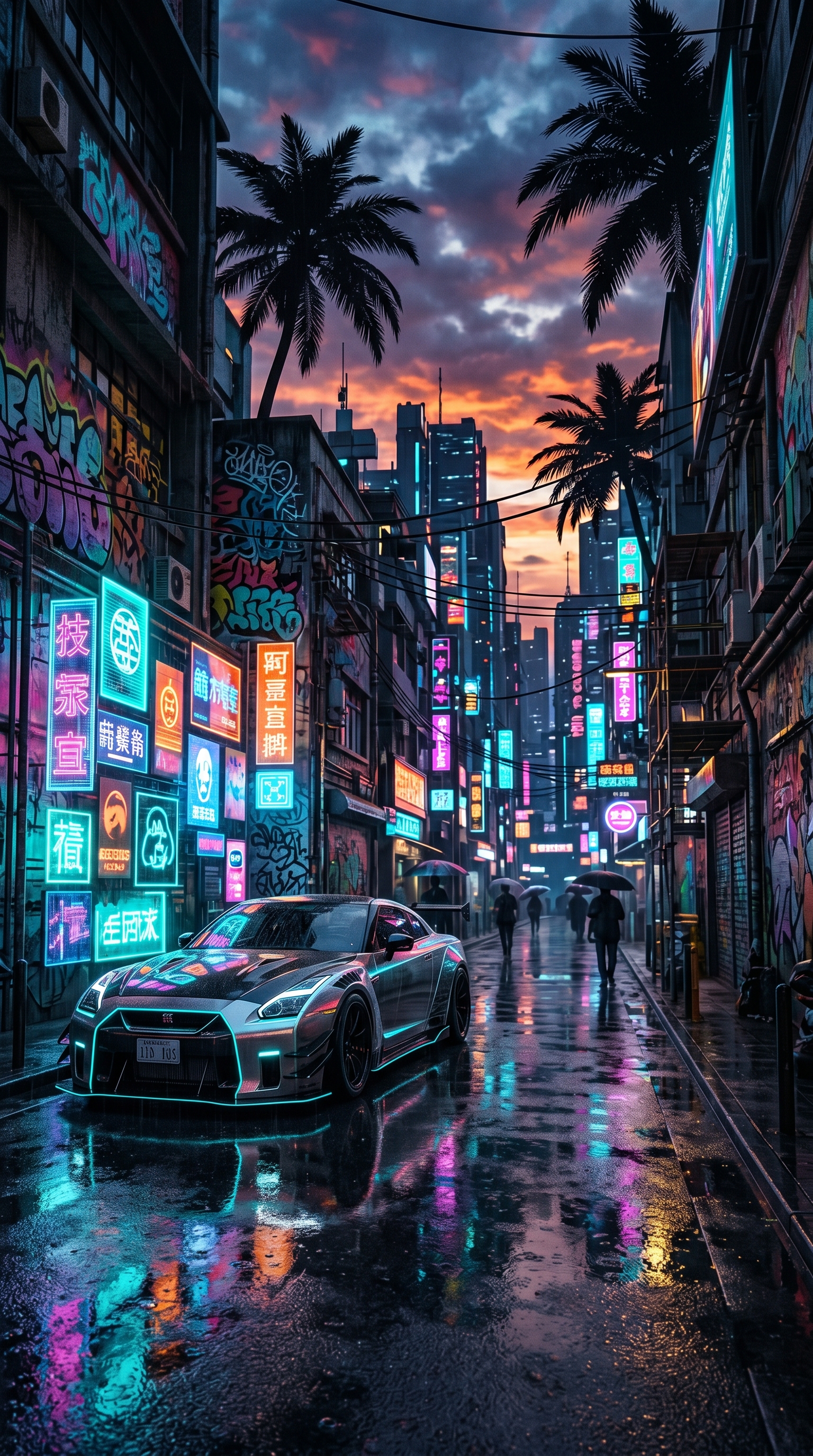
Acerca del arte de Cyberpunk
The term 'cyberpunk' was coined by Bruce Bethke in 1980 for his short story published in Amazing Stories in 1983. Editor Gardner Dozois popularized it through a 1984 Washington Post article. William Gibson's novel Neuromancer (1984) became the genre's archetype, winning the Hugo, Nebula, and Philip K. Dick Awards. Philip K. Dick's Do Androids Dream of Electric Sheep? (1968) prefigured the movement. Ridley Scott's Blade Runner (1982) crystallized the visual language — Gibson himself noted the film matched his Neuromancer vision. Scott described his cyberpunk Los Angeles as 'Hong Kong on a very bad day,' drawing on the neon-saturated commercial districts of 1980s Asian cities. Production designer Syd Mead, cinematographer Jordan Cronenweth, and VFX supervisor Douglas Trumbull built the aesthetic using miniature models and matte paintings. The BFI identifies Blade Runner as foundational to cyberpunk cinema, directly influencing Brazil, The Fifth Element, Dark City, and The Matrix trilogy. Japanese works — Katsuhiro Otomo's Akira manga (1982) and anime (1988), Ghost in the Shell (1995) — expanded the aesthetic globally. Gibson observed that 'modern Japan simply was cyberpunk,' citing Shibuya's resemblance to Blade Runner. The Kowloon Walled City's hyper-dense urbanism also inspired cyberpunk landscapes across Western and Japanese media. In the 2020s, Cyberpunk 2077 (2020) and its anime companion Cyberpunk: Edgerunners (2022) brought the aesthetic to mainstream gaming and streaming audiences.
Rasgos visuales
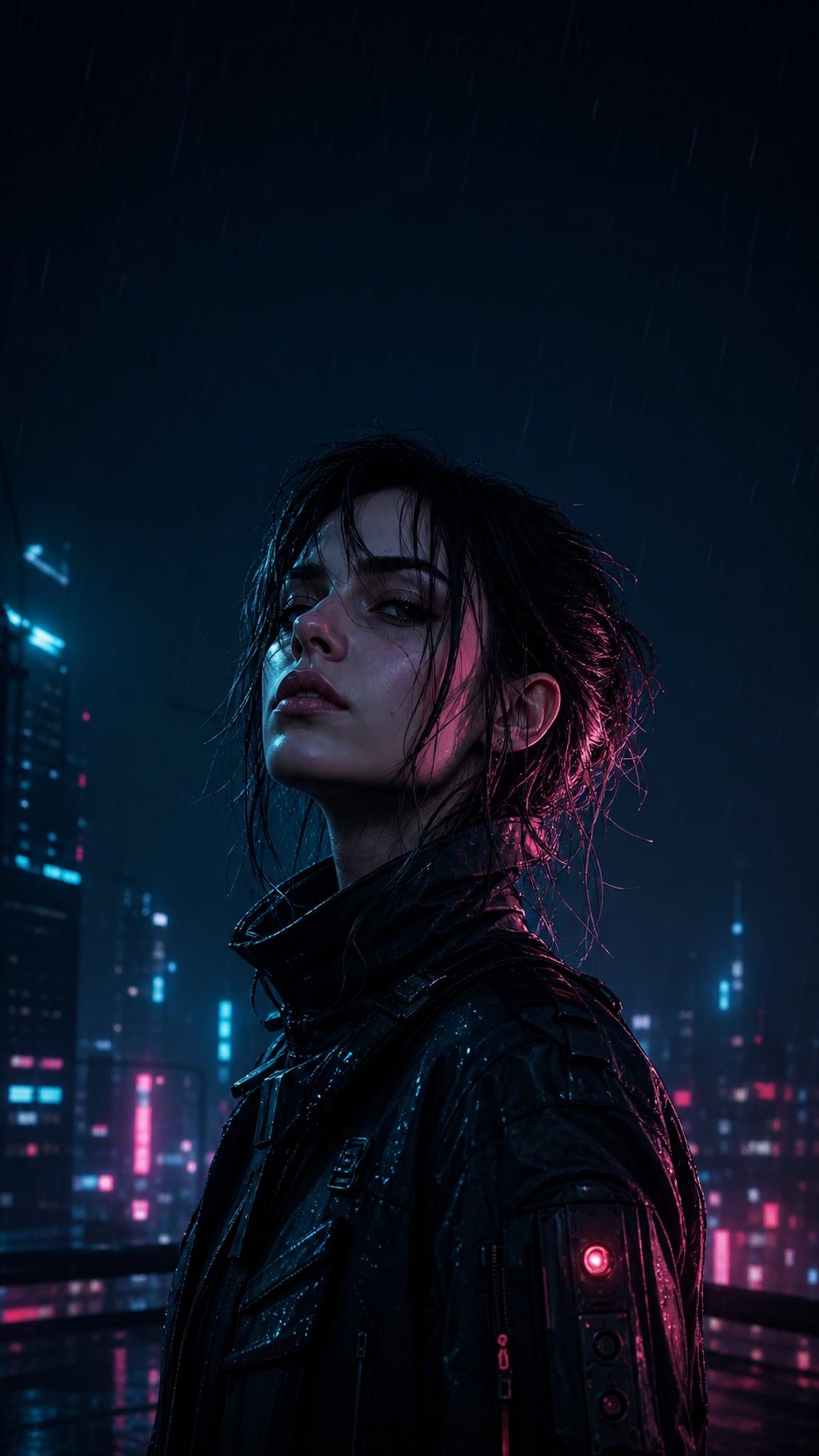
- Neon lighting in cyan, magenta, and electric blue against dark backgrounds
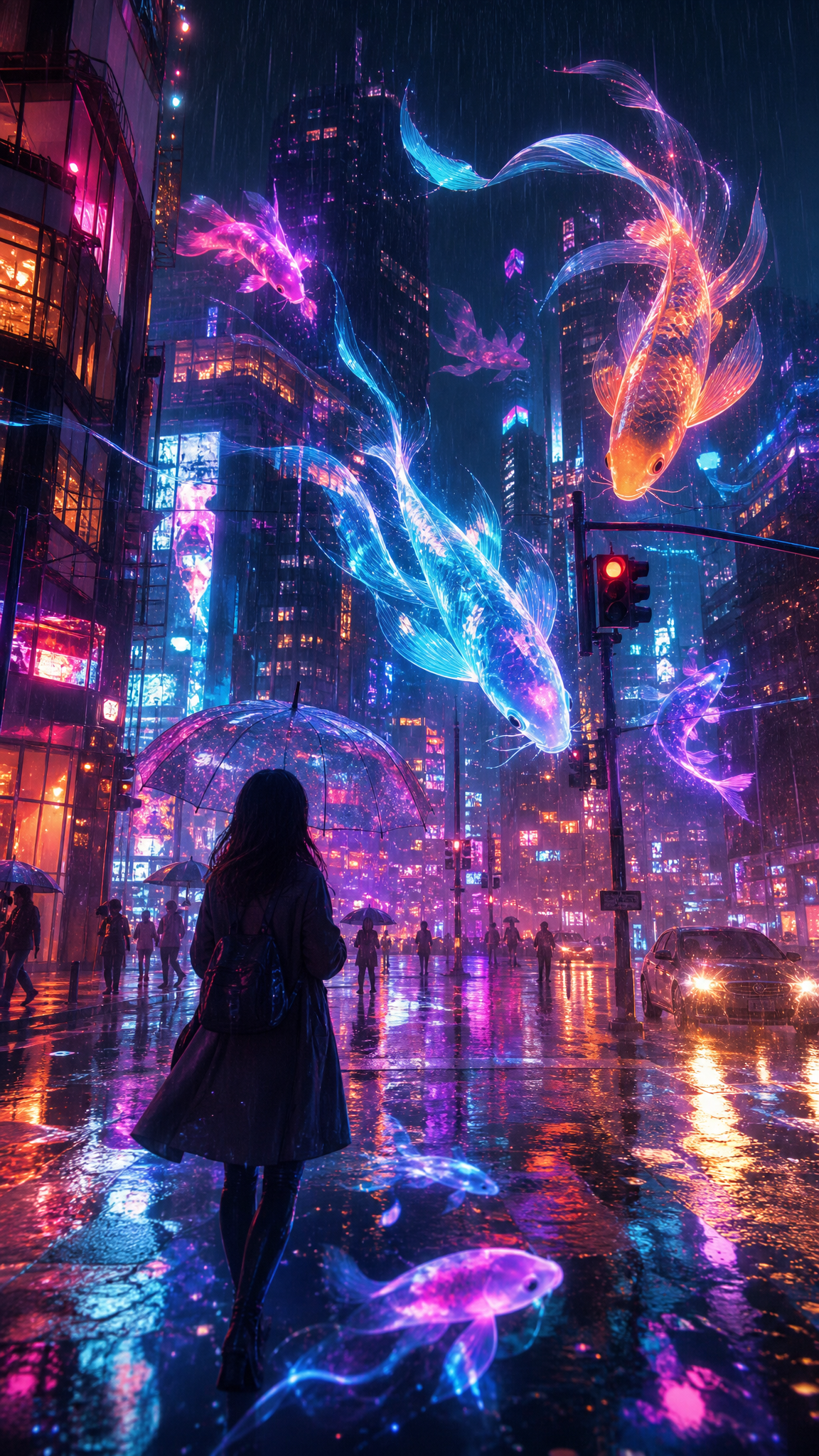
- Rain-soaked streets with reflective wet surfaces amplifying neon glow
- Dystopian megacity skylines with towering skyscrapers and dense vertical architecture
- Holographic advertisements and floating digital displays
- High-tech/low-life contrast — advanced technology amid urban decay and grime
- Japanese and East Asian signage, kanji neon signs, and night market imagery
- Film noir atmosphere — moody shadows, fog, volumetric lighting
- Circuit board patterns, data streams, and cyberspace visualization
- Cybernetic augmentation — prosthetic limbs, glowing implants, wired interfaces
- Corporate megastructures and pyramid-like power architecture
- Synthetic materials — PVC, chrome, reflective surfaces
- Color palette dominated by black/deep blue with saturated neon accents (cyan, magenta, yellow, red)
Casos de uso
Gaming desktop setups — especially with RGB peripherals and dark room ambiance
Dual monitor configurations (3840x1080) for immersive panoramic cityscapes
Ultrawide displays (3440x1440, 5120x1440) — cyberpunk cityscapes benefit from wide aspect ratios
Dark mode desktop themes — neon-on-black palette complements system dark mode
Phone lockscreens in 9:16 portrait — vertical neon alley or skyscraper compositions
Streaming/content creator backdrop aesthetics
Tablet and iPad displays for atmospheric ambient screens
Estilos similares
Diferente de
Guía de prompt
Indicaciones para el prompt
- Start with a setting: 'cyberpunk cityscape at night' or 'neon-lit alleyway in rain' establishes the scene
- Add atmospheric modifiers: 'rain-soaked,' 'foggy,' 'moody lighting,' 'volumetric light' for depth
- Specify a color direction: 'neon cyan and magenta lighting,' 'electric blue highlights' to control palette
- Include architectural detail: 'towering skyscrapers with holographic billboards,' 'dense vertical city'
- Reference canonical sources for style anchoring: 'Blade Runner style,' 'Ghost in the Shell aesthetic,' 'Syd Mead inspired'
- Request specific perspectives for variety: 'aerial view,' 'street-level POV,' 'looking up at buildings,' 'rooftop perspective'
- For wallpaper-specific output, always specify aspect ratio: '--ar 16:9' for desktop, '--ar 9:16' for phone, '--ar 21:9' for ultrawide
Consejos
- Internal editorial suggestion: Layer your prompt — start with environment, then lighting, then color, then mood. This gives the model a clear hierarchy.
- Internal editorial suggestion: Use 'cinematic' or 'anamorphic' as style modifiers to get the widescreen film look that defines cyberpunk visual media.
- Internal editorial suggestion: For phone wallpapers, focus on vertical compositions — a single neon alley or a skyscraper viewed from below works better than a wide panorama.
- Internal editorial suggestion: Iterate 3-5 times per concept. Your first generation is a draft; adjust keywords based on what the model over- or under-emphasizes.
- Internal editorial suggestion: Adding 'reflection' or 'puddle' to prompts dramatically improves cyberpunk scenes by creating natural light doubling on wet surfaces.
Palabras clave recomendadas
Evitar
Errores comunes
- Over-saturating neon colors without dark contrast — results in a flat, garish image rather than atmospheric depth
- Prompting only 'cyberpunk' without scene specifics — produces generic, unfocused results
- Neglecting wet/reflective surfaces — misses the signature rain-soaked look that doubles the visual richness
- Forgetting aspect ratio specification — default square outputs waste composition potential for wallpapers
- Including too many character details in a wallpaper prompt — clutters the scene when the goal is an environmental composition