#Landscape
Landscape is one of the oldest and most enduring visual genres, depicting natural scenery — mountains, valleys, rivers, forests, oceans — where a wide view arranged into a coherent composition is the primary subject. Two major traditions developed independently: Chinese shanshui ('mountain-water') painting from the 4th century CE, and Western landscape painting gaining independence in the 17th century. As a wallpaper style, landscape is among the most universally popular categories, offering calming, expansive compositions that naturally suit widescreen and ultrawide displays, with research linking nature imagery to stress reduction and improved focus.
Landscapeアートについて
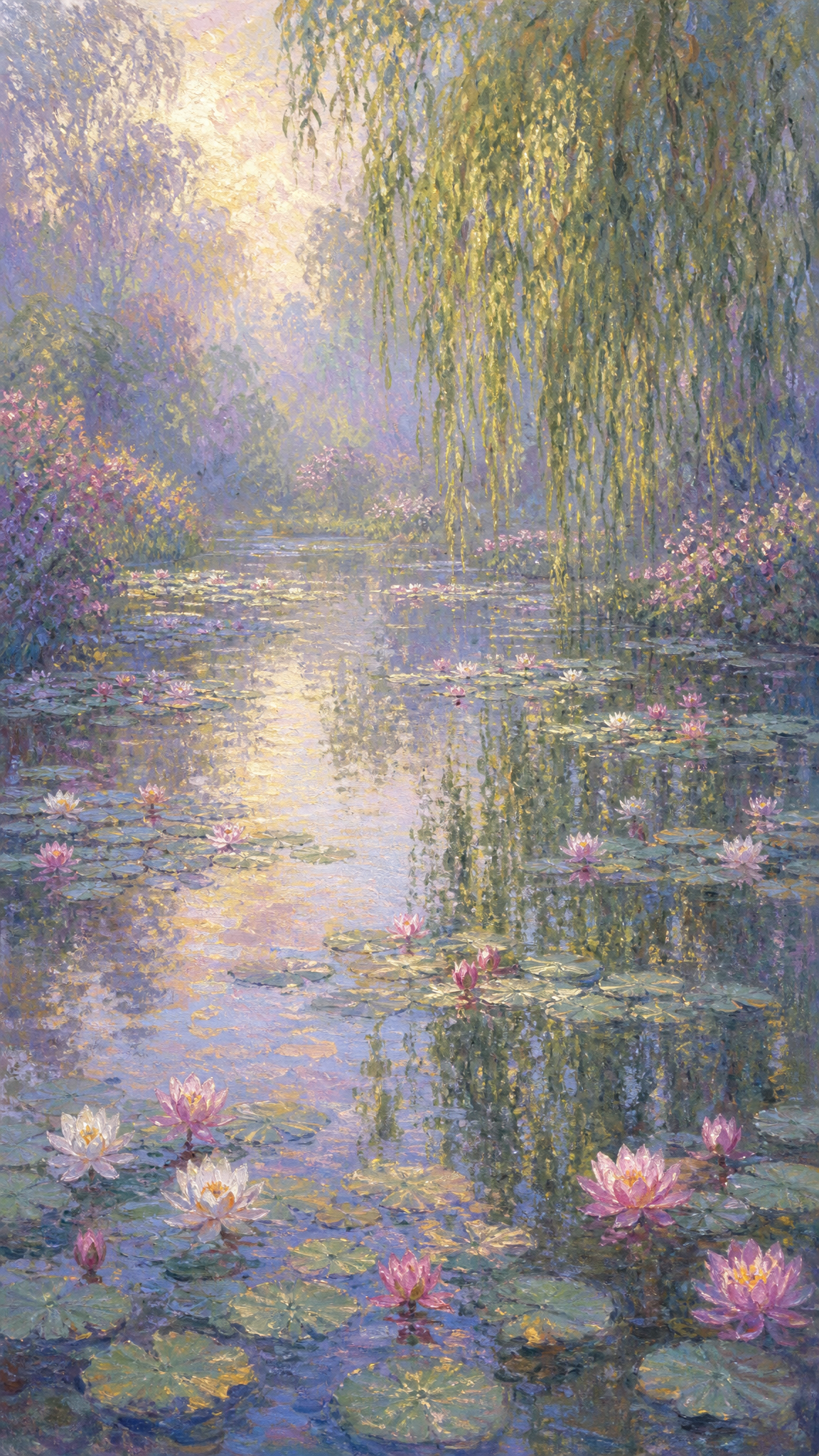
Landscape painting has two major independent traditions. In China, the genre is traceable to the 4th century CE. Gu Kaizhi (344-406 AD) of the Eastern Jin dynasty is credited as a founding figure. By the late Tang Dynasty (618-907), landscape (shanshui, literally 'mountain-water') evolved into an independent genre embodying, as the Met Museum describes, 'the universal longing of cultivated men to escape their quotidian world to commune with nature.' Wang Wei (699-759) pioneered the monochrome mountain-water style. The Song Dynasty (960-1279) is considered the pinnacle, with artists like Li Cheng and Fan Kuan producing works 'among the most highly regarded' in all of Chinese art. In the Yuan Dynasty (1279-1368), the 'mind landscape' emerged — paintings conveying 'the inner landscape of the artist's heart and mind.' In the Western tradition, landscape existed only as background in religious or historical paintings before the 17th century. The earliest pure landscapes are Minoan frescos (c. 1500 BCE). The German Danube School produced the first Western pure landscape paintings in the early 16th century. Claude Lorrain and Nicolas Poussin established the classical landscape tradition in the 17th century. The American Hudson River School (1825-1870, Thomas Cole, Frederic Edwin Church) celebrated untouched wilderness. The Impressionists (1870s onward, Monet, Cezanne) made landscape, as Wikipedia notes, 'the main source of general stylistic innovation.' The English word 'landscape' entered the language around 1600 as an anglicization of the Dutch 'landschap.' A key cultural contrast: in the West, landscape occupied a low position in the hierarchy of genres until the 19th century; in East Asia, mountain-water ink painting was traditionally the most prestigious form of visual art.
ビジュアルの特徴
- Depth and atmospheric perspective — layered foreground, middle ground, and background creating vast distance
- Natural light as protagonist — golden hour, blue hour, dramatic storm light, dappled forest light
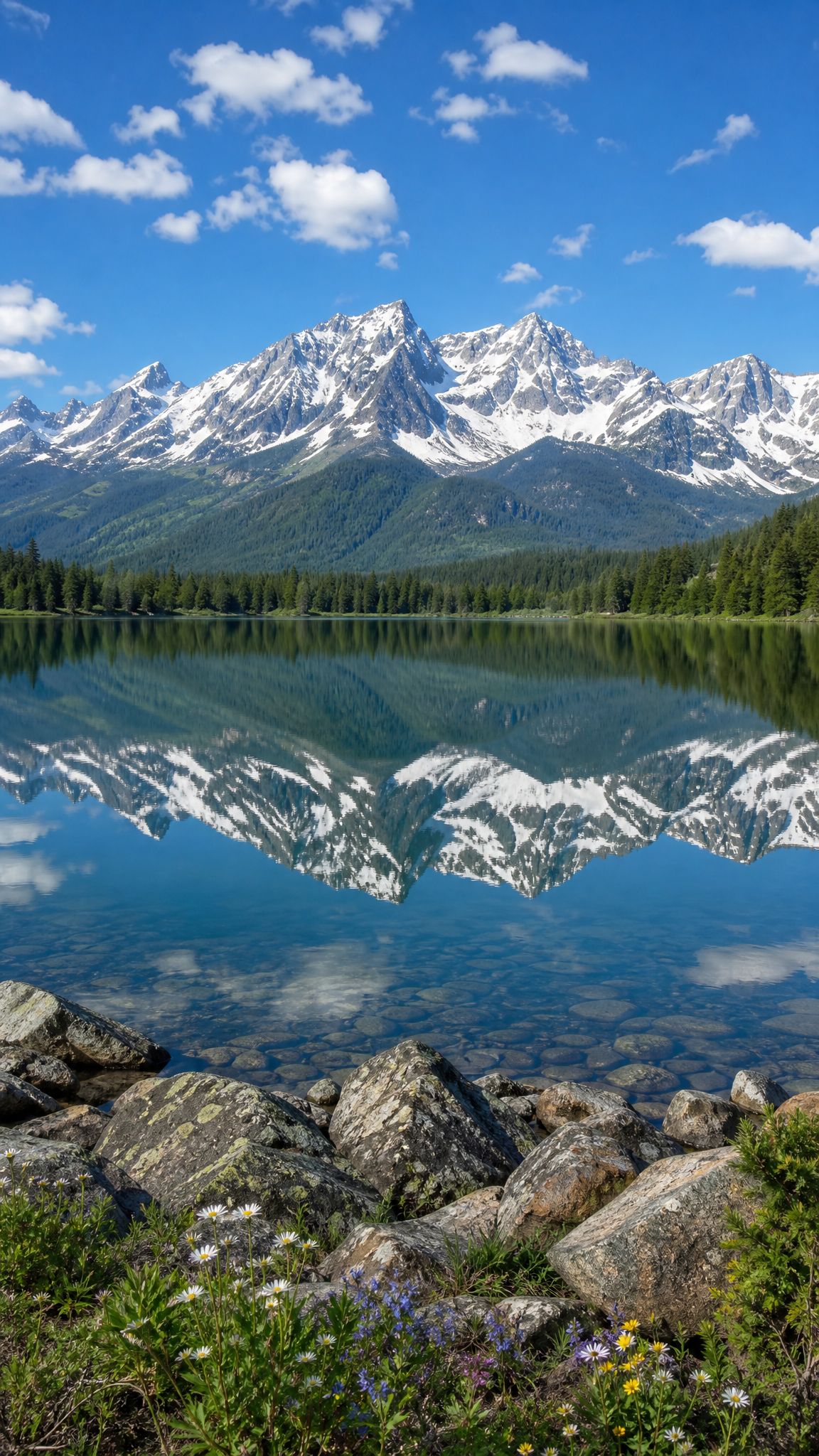
- Color palettes tied to environment: mountain (cool blues, grays, whites), forest (deep greens, earth tones), ocean (blues, teals), desert (warm oranges, ochres), autumn (reds, golds)
- Horizontal composition dominance — wide views naturally suit landscape orientation
- Minimalist focal points — often a single dominant element (lone tree, mountain peak, lighthouse) against expansive negative space
- Seasonal and temporal variation — same scene transforms across seasons and times of day
- Sub-styles: mountain/alpine, ocean/coastal, forest/woodland, desert/arid, waterfall/river, sunset/sunrise, winter/snow, tropical
活用例
Desktop (16:9) — the ideal format; landscape orientation matches the genre's natural horizontal emphasis
Ultrawide (21:9, 32:9) — exceptional for panoramic landscapes; mountain ridgelines, coastal panoramas stretch naturally
Multi-monitor — continuous landscape panoramas spanning 2-3 monitors are one of the most popular multi-monitor wallpaper genres
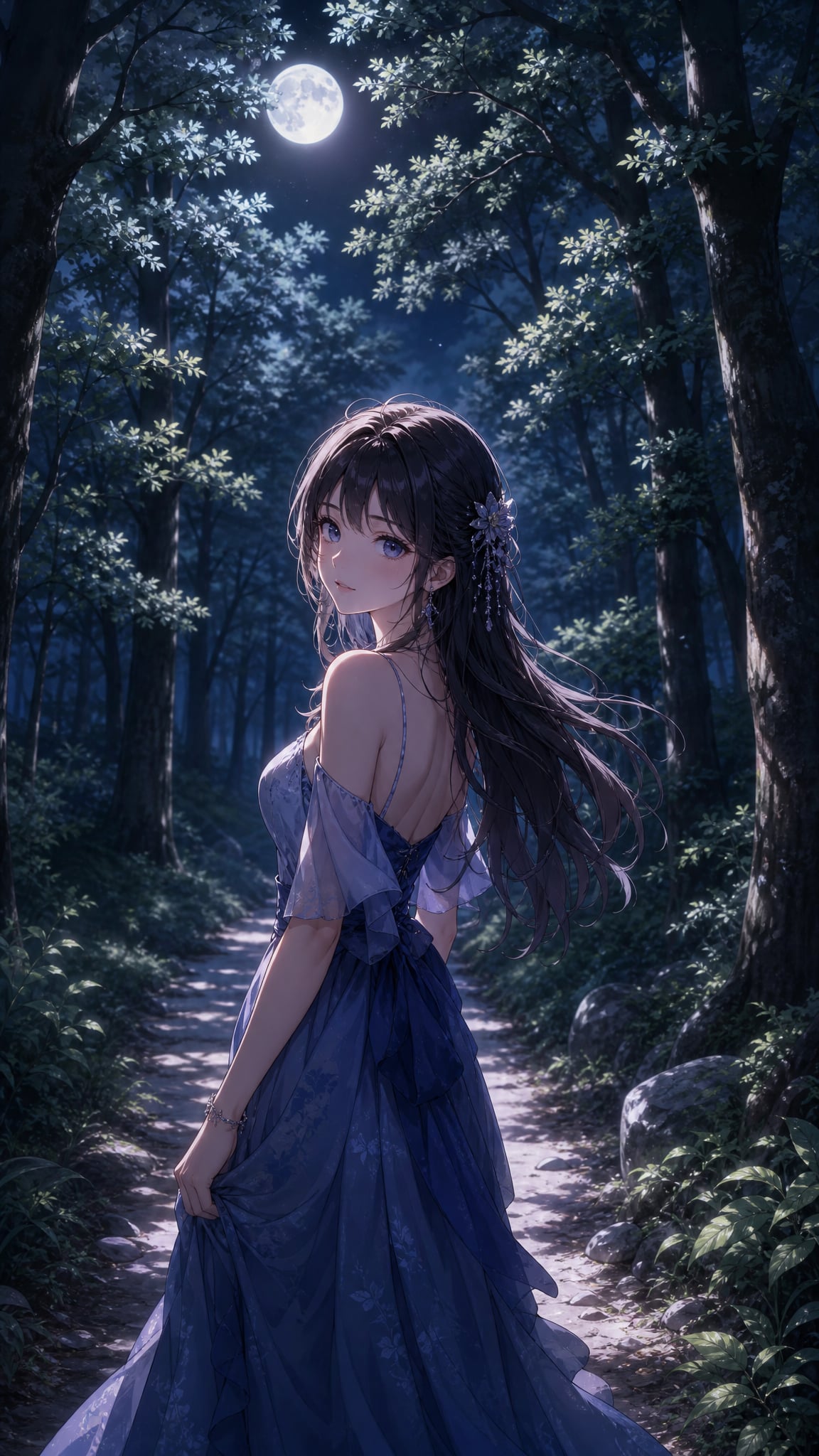
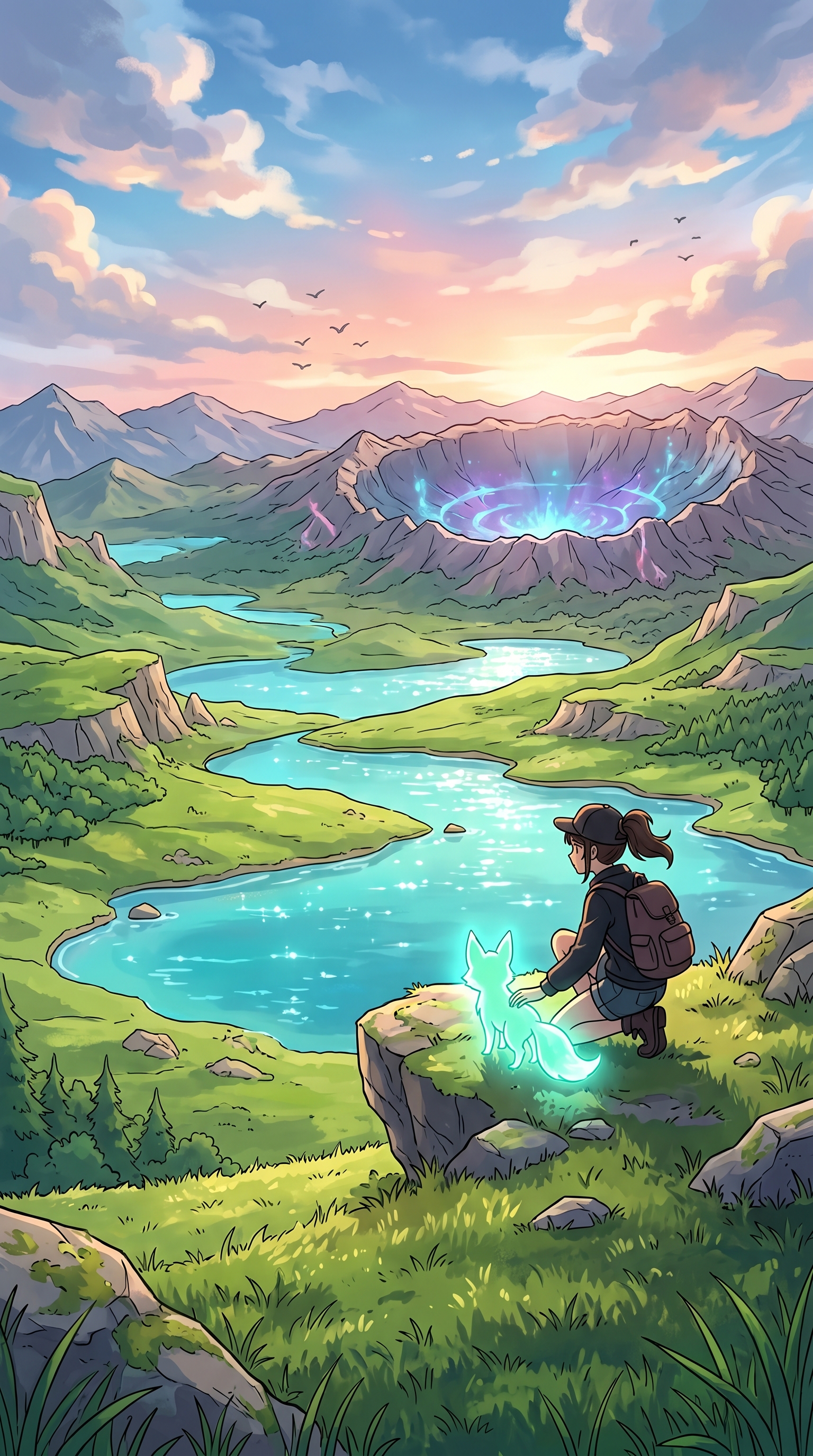
Mobile (9:16) — requires vertical-composition landscapes: waterfalls, forest canopy looking up, canyon walls, lighthouse
4K/8K — landscape imagery benefits enormously from high resolution; fine detail in foliage, water texture, cloud formations
Calming/productivity contexts — heavily favored for work environments due to nature imagery's association with stress reduction
類似スタイル
異なる点
プロンプトガイド
プロンプトの方向性
- Start with environment type: 'mountain landscape,' 'ocean coastline,' 'forest path,' 'desert dunes' for clear scene
- Specify lighting/time: 'golden hour sunset,' 'blue hour dawn,' 'misty morning,' 'dramatic storm clouds' — lighting defines mood
- Add season: 'autumn foliage,' 'winter snow,' 'spring bloom,' 'summer green' for specific palette
- Include composition direction: 'panoramic wide view,' 'looking up through tree canopy,' 'aerial view' for variety
- Add atmosphere: 'misty,' 'foggy,' 'crystal clear,' 'dramatic clouds' for depth and mood
- Always specify aspect ratio: '--ar 16:9' for desktop, '--ar 9:16' for phone, '--ar 21:9' for ultrawide
ヒント
- Internal editorial suggestion: Golden hour and blue hour lighting produce the most visually striking landscape wallpapers. Specify the time of day explicitly.
- Internal editorial suggestion: For desktop wallpapers, compositions with open sky areas and clean horizons leave space for desktop icons.
- Internal editorial suggestion: For phone wallpapers, vertical landscapes work best — waterfalls, tall trees, canyon walls, or looking-up-through-forest compositions.
- Internal editorial suggestion: Adding 'mist' or 'fog' to any landscape prompt adds atmospheric depth and mystery — it separates depth layers visually.
- Internal editorial suggestion: For ultrawide monitors, specify 'panoramic wide angle' explicitly to get compositions that fill the extended horizontal field.
おすすめキーワード
避けること
よくある失敗
- Missing atmospheric perspective — distant elements should be lighter/bluer than foreground; without this, scenes feel flat
- Neglecting the sky — skies often occupy half the composition and are critical to mood
- Over-saturating colors — natural landscapes have subtle color variation; hyper-saturation looks artificial
- Forgetting depth layers — the best landscapes have clear foreground, middle ground, and background separation
- Using wrong orientation — panoramic landscapes in portrait format crop the essential horizontal sweep