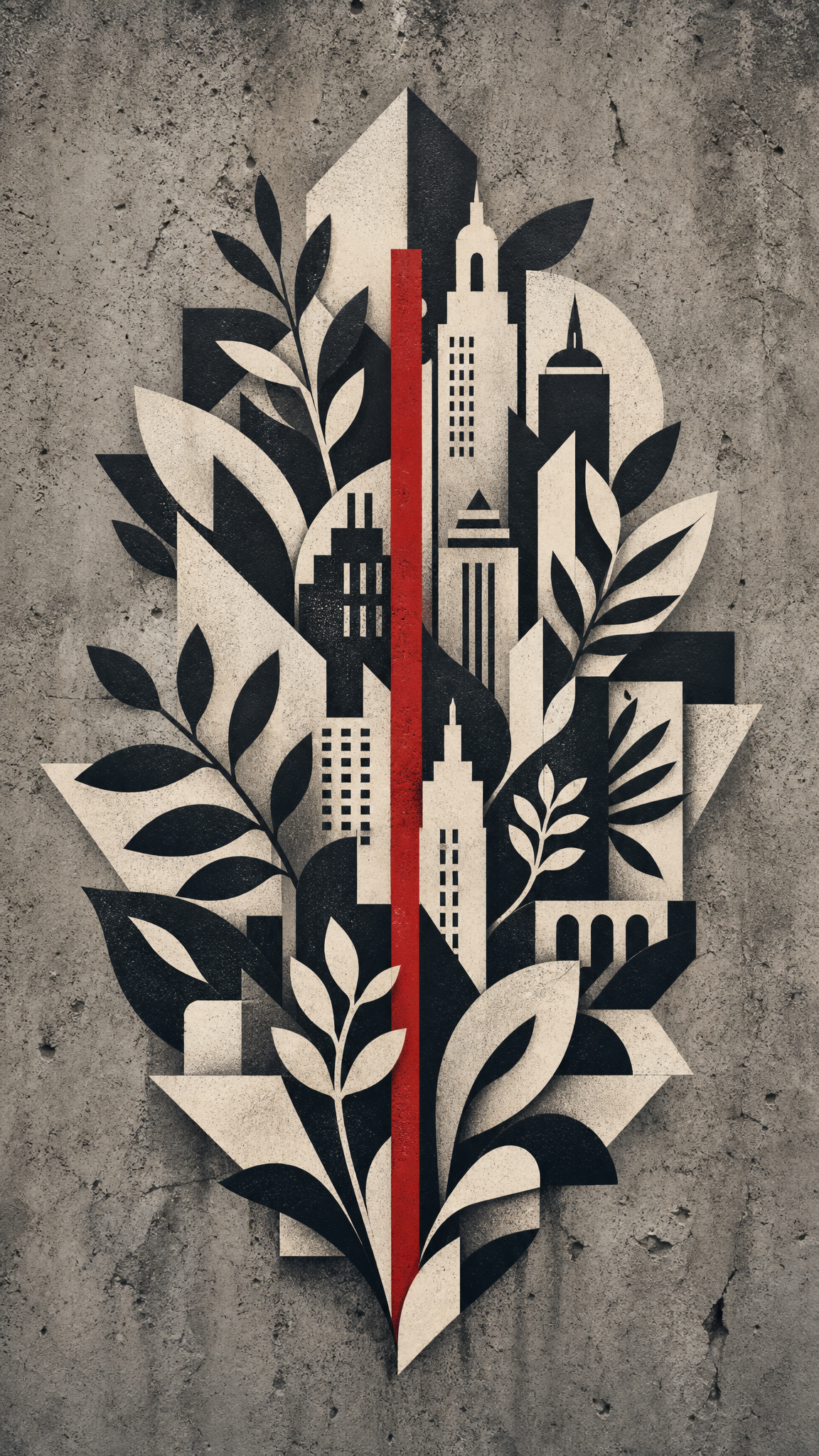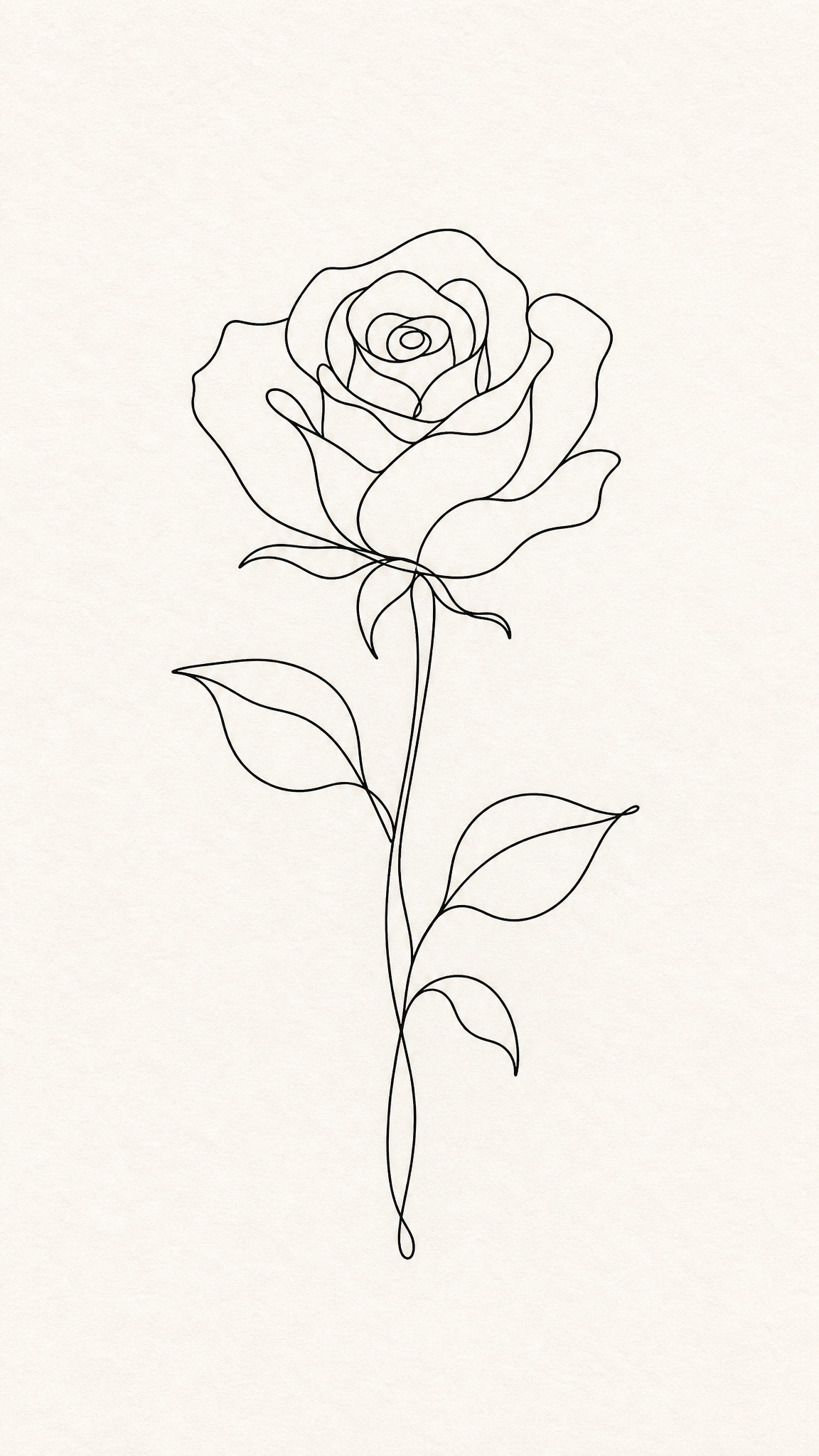
#Line Art
Line art wallpapers distill visual expression to its purest form: distinct lines placed against a clean background, with no fills, gradients, or tonal shading. These wallpapers rely on contour, weight variation, and negative space to create striking compositions that feel both minimal and deeply intentional. The style translates naturally to digital wallpaper because its high-contrast simplicity remains legible at any screen resolution, while its restrained palette keeps desktop icons and widgets readable. Line art wallpapers range from single continuous-line portraits to intricate crosshatched landscapes, offering a sophisticated aesthetic that complements modern interior and digital spaces.
Line Artアートについて
Line art is one of the oldest forms of visual expression, with roots in prehistoric cave engravings and ancient Egyptian hieroglyphic outlines. Before the invention of photography and halftone printing, line drawing was the standard format for print illustrations, using black ink on white paper. Henri Matisse (1869-1954) elevated pure line drawing to high art with his fluid single-stroke portraits, while Egon Schiele (1890-1918) developed an intensely expressive contour line style within Austrian Expressionism. In the 20th century, artists like Pablo Picasso and Alexander Calder further explored continuous line drawing, and the tradition continues in contemporary minimalist illustration and digital art.
ビジュアルの特徴
- Single continuous or discrete lines on clean backgrounds
- Monochromatic or limited-color palette (typically black on white)
- Variable line weight creating depth and emphasis
- Prominent negative space as a compositional element
- Contour-based representation of forms without interior fills
- Crosshatching or stippling for implied tonal variation
- Geometric precision or fluid organic curves depending on substyle
- High contrast between line and background
- Minimalist composition with deliberate simplicity
- Visible hand-drawn quality or digitally precise linework
活用例
Minimalist desktop and mobile wallpapers for distraction-free workspaces
Elegant phone lock screens that pair well with any icon set
Monochrome accent walls in modern interior design via large-format prints
Professional background imagery for video calls and presentations
Complementary wallpapers for e-ink and always-on displays
Artistic statement pieces for gallery walls and creative studios
類似スタイル
異なる点
プロンプトガイド
プロンプトの方向性
- Specify line weight explicitly: 'thin single-weight contour lines' or 'variable-weight brush-style lines' to control the visual density
- Define the background clearly: 'pure white background' or 'off-white cream paper texture' to prevent AI from adding unwanted fills
- Reference specific line art traditions: 'Matisse-style single continuous line portrait' or 'architectural cross-section line drawing'
- Use negative terms to prevent fills: 'no shading, no gradients, no color fills, line only' is essential for clean results
- Specify composition density: 'sparse composition with 70% negative space' or 'dense crosshatched landscape filling the frame'
- Mention the intended subject clearly: 'female profile in continuous line' or 'botanical leaf contour study' to guide form
ヒント
- Internal editorial suggestion: Line art wallpapers perform best in black-on-white and white-on-black variants; always generate both for maximum catalog coverage
- Internal editorial suggestion: Pair line art pieces with complementary tags like 'minimalist' and 'sketch' to improve cross-discovery in the tag system
- Internal editorial suggestion: Subject matter for line art wallpapers should lean toward recognizable forms (faces, plants, animals, architecture) since abstract lines alone can feel too sparse for wallpaper use
- Internal editorial suggestion: Consider seasonal line art collections (spring botanicals, winter landscapes) to capture long-tail seasonal search traffic
おすすめキーワード
避けること
よくある失敗
- AI adds unwanted shading or fills between lines, breaking the line-only constraint; fix by adding explicit negative prompts for shading
- Lines become too uniform in weight, losing the expressive quality; specify 'variable line weight' or 'calligraphic line variation'
- Background gets textured or colored when it should be clean; explicitly state 'plain white background, no texture'
- Continuous line breaks into disconnected segments; reference 'single unbroken continuous line' and lower complexity of the subject