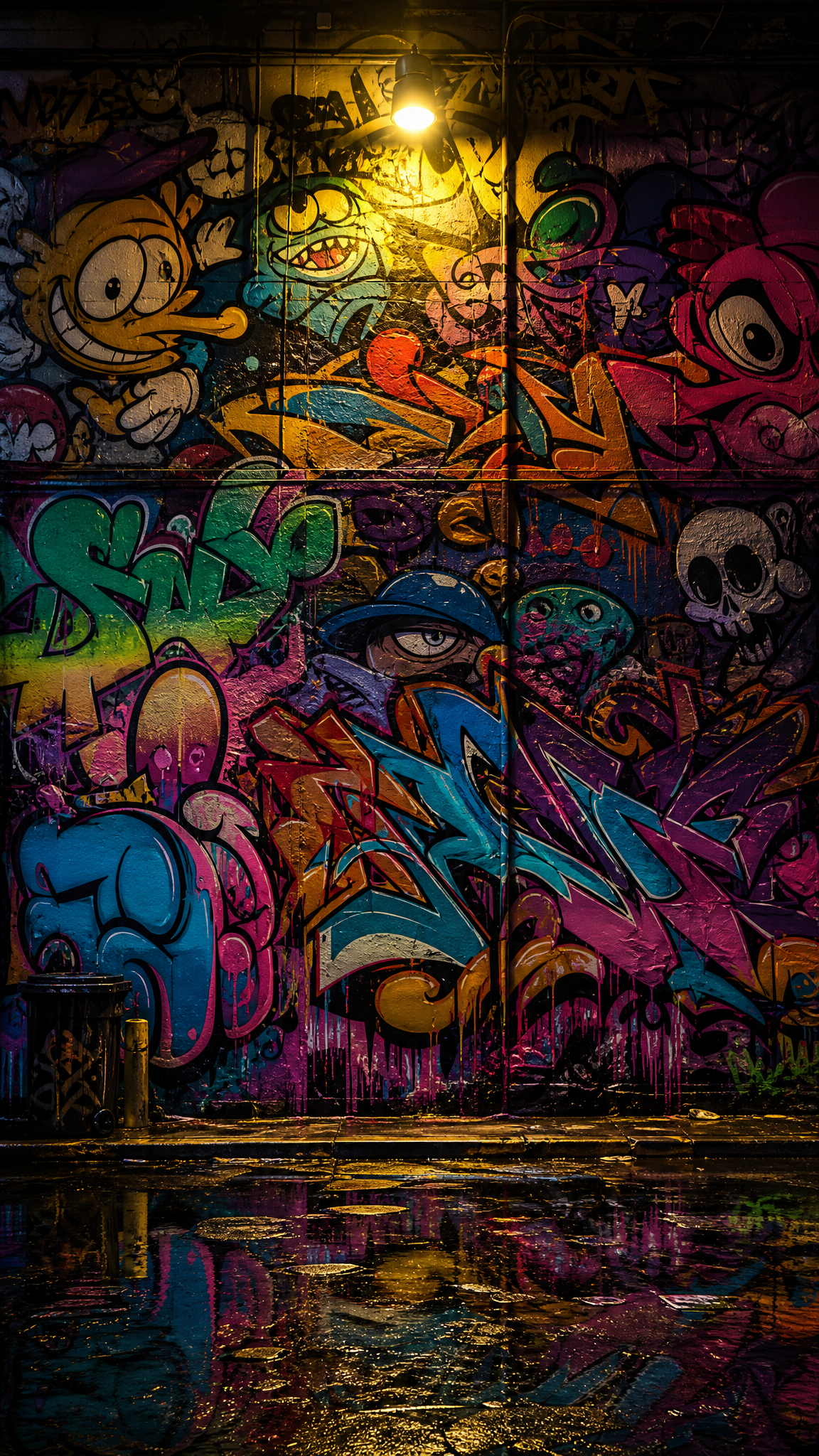
#Street Art
Street art is a visual art form rooted in New York City's graffiti culture of the 1960s-1980s, evolving from text-based tags into visually conceptual works created in public spaces. Defined by bold colors, stencil techniques, large-scale murals, and political/social commentary, the style encompasses spray paint, wheatpasting, sticker art, mosaic tiling, and more. As a wallpaper style, street art delivers high-energy, high-contrast compositions with bold graphic elements that translate powerfully across screen sizes.
Acerca del arte de Street Art
Street art emerged from New York City's graffiti culture, with roots in the 1960s through political activists and gang members, maturing in the 1970s, and peaking in the 1980s with spray-painted full-car subway train murals in the Bronx. The shift from text-based graffiti to visually conceptual street art occurred during the 1980s. Earlier precursors existed in Europe: in France, connections trace to Lettrism of the 1940s and Situationist slogans painted on Parisian walls starting in the late 1950s. In Amsterdam, the provos counterculture movement used the street as canvas in the mid-1960s. Key founding figures include Keith Haring, who commandeered the Bowery Mural wall in 1982; Jean-Michel Basquiat, known for SAMO tags; Richard Hambleton, who pioneered shadow figures; and Banksy, the anonymous British stencil artist who became arguably the most globally recognized street artist. Franco the Great developed gate paintings in Harlem starting in 1978, and Rene Moncada created 'I AM THE BEST ARTIST' murals from the late 1970s. The Tate also retrospectively classifies earlier artists like Jenny Holzer, Barbara Kruger, and Gordon Matta-Clark as having worked in ways now considered street art.
Rasgos visuales
- Bold, high-contrast colors with large-scale compositions designed for architectural surfaces
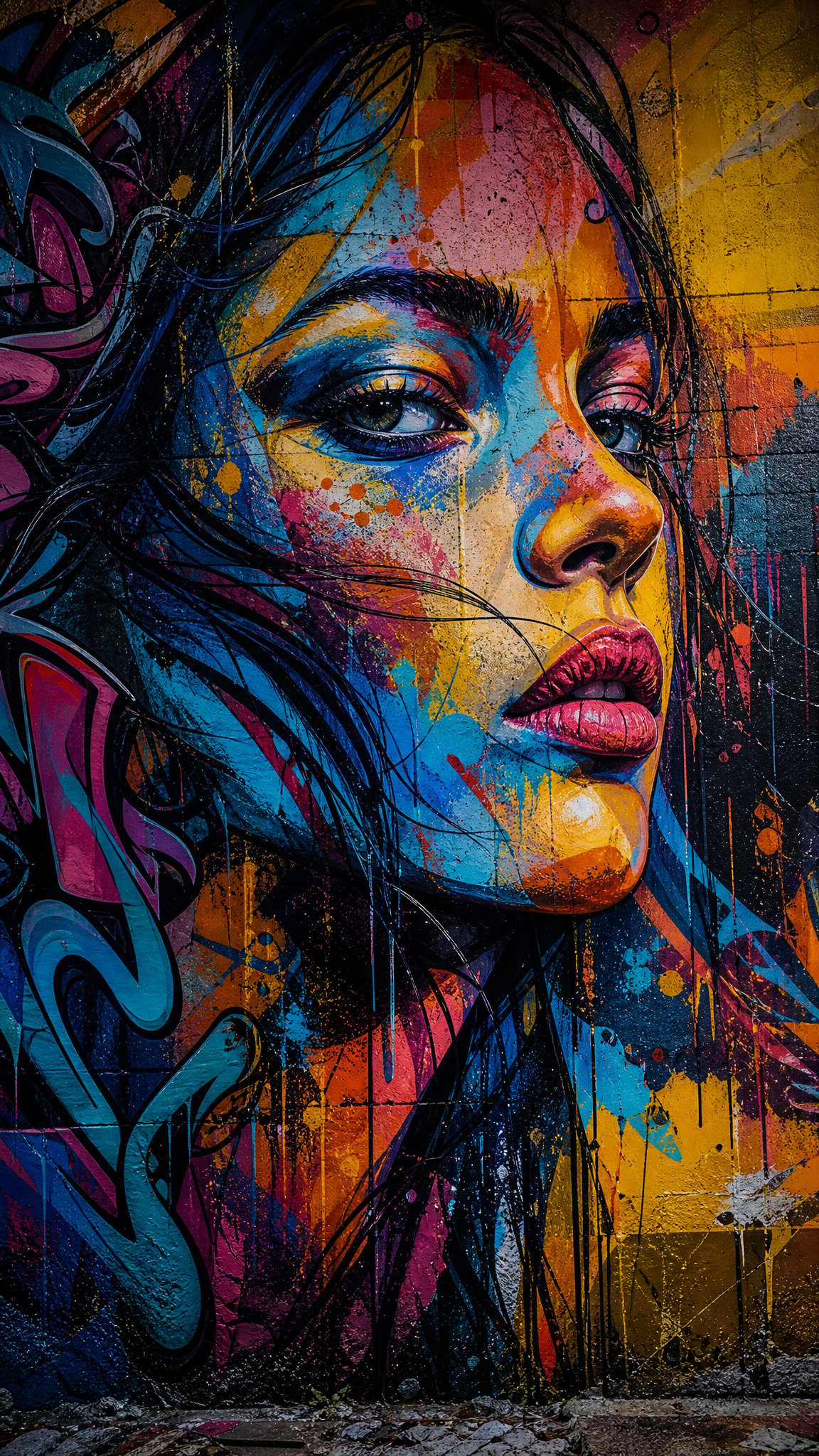
- Spray paint as primary medium — visible overspray, drips, and paint texture
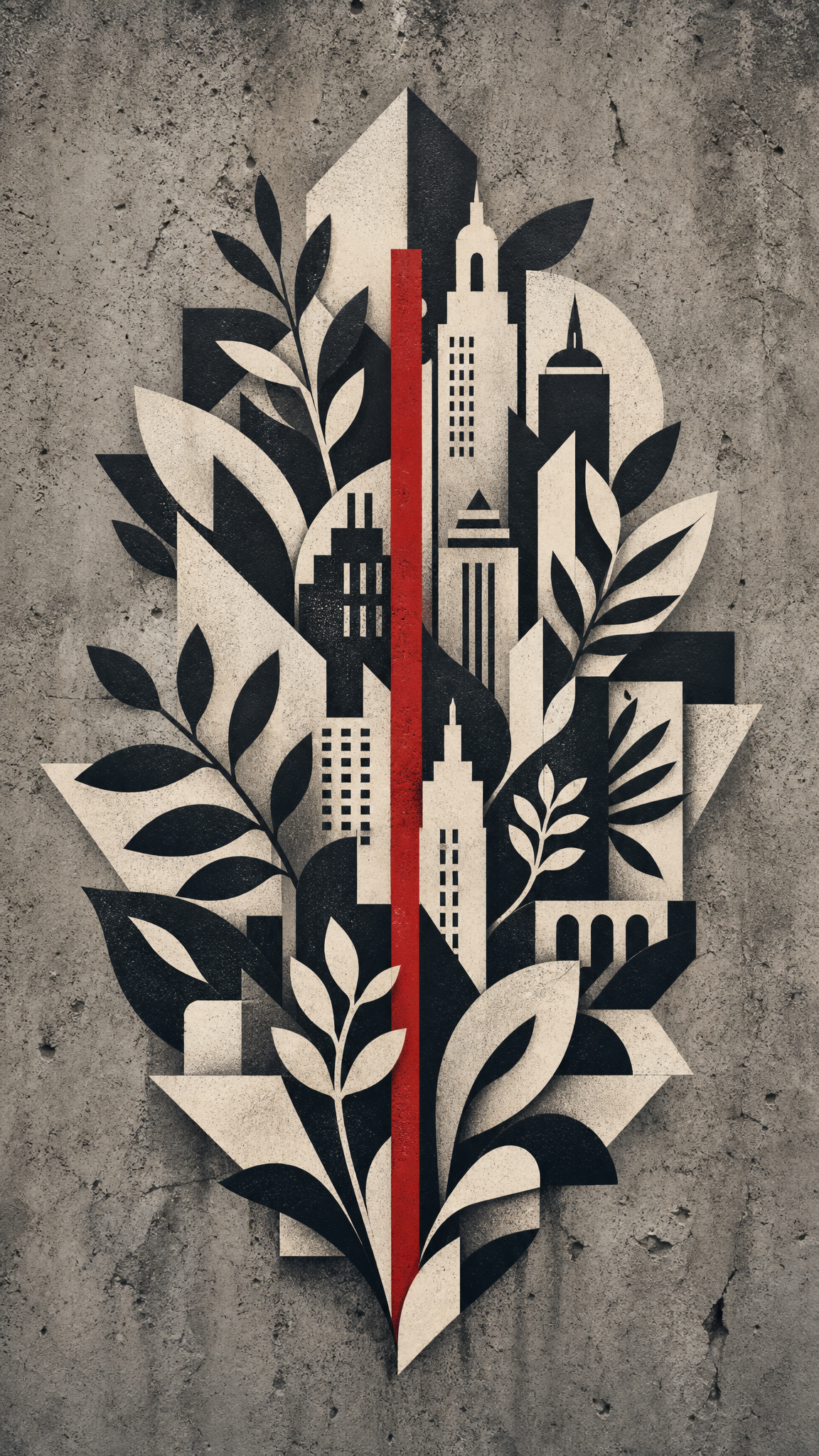
- Stencil graffiti — cut-out templates for reproducible, sharp-edged images, often multi-layered for depth
- Wheatpasting/fly-posting — paper-based works pasted onto walls
- Sticker art and freehand drawing
- Figurative imagery — portraits, characters, stylized figures
- Political and social commentary messages integrated into visual compositions
- Typographic elements — bold lettering, throw-ups, bubble letters
- Urban context integration — works interacting with physical environment (walls, doors, infrastructure)
- Mosaic tiling (e.g., Invader's pixel-art mosaics)
- Layered, weathered texture — paint over paint, peeling posters, urban patina
- Scale ranging from small stickers to building-sized murals
Casos de uso
Desktop widescreen (16:9) and ultrawide monitors — mural-style horizontal compositions span wide formats naturally
Phone/tablet lock screens — bold stencil graphics and high-contrast character art translate well to portrait formats
Dual-monitor setups — panoramic street art murals spanning multiple screens
Dark-themed setups — many street art pieces feature dark/urban backgrounds complementing dark-mode interfaces
Creative and design workstations — the artistic, rebellious aesthetic fits creative professional environments
High-resolution displays (4K+) — paint texture detail, spray gradients, and wall surface detail reward high pixel density
Estilos similares
Diferente de
Guía de prompt
Indicaciones para el prompt
- Start with technique: 'street art stencil on concrete wall' or 'spray paint mural on brick wall' establishes the medium
- Specify subject: 'portrait,' 'political figure,' 'abstract character,' 'urban landscape' for content direction
- Add urban context: 'brick wall background,' 'weathered concrete,' 'peeling poster layers' for authentic texture
- Include style references: 'Banksy style stencil,' 'Keith Haring style figures,' 'colorful spray paint mural'
- For wallpaper-specific output, add: 'high resolution,' 'detailed paint texture,' 'visible spray gradients'
- Always specify aspect ratio: '--ar 16:9' for desktop, '--ar 9:16' for phone
Consejos
- Internal editorial suggestion: Always specify a wall surface in your prompt ('brick wall,' 'concrete,' 'metal shutter'). Without it, results tend toward digital illustration.
- Internal editorial suggestion: Add 'dripping paint' or 'spray overspray' as texture modifiers for authentic street art quality.
- Internal editorial suggestion: For phone wallpapers, focus on single character/portrait compositions centered on the wall surface.
- Internal editorial suggestion: Reference specific artists for style anchoring — 'Banksy style' for stencil work, 'Obey Giant style' for propaganda poster aesthetic, 'Keith Haring style' for outlined figures.
- Internal editorial suggestion: Iterate if results look too clean — add 'gritty,' 'weathered,' 'urban decay' modifiers.
Palabras clave recomendadas
Evitar
Errores comunes
- Producing clean digital graphics instead of textured, paint-on-wall imagery — the urban surface is essential
- Forgetting the wall/surface texture — street art without a physical substrate looks like graphic design
- Over-detailing small elements — street art is bold and readable at distance; fine detail gets lost
- Making the composition too symmetrical or structured — street art is expressive, not geometric
- Ignoring urban patina — weathering, peeling, and layering are part of the authentic aesthetic