#Dark Academia
Dark academia is an internet-born aesthetic subculture that emerged on Tumblr around 2015, romanticizing classical education, Gothic architecture, and literary culture through a dark, moody visual lens. Defined by warm-dark color palettes (black, brown, cream, burgundy, forest green), old libraries, candlelit studies, and antique books, the aesthetic draws primary inspiration from Donna Tartt's novel 'The Secret History' (1992). As a wallpaper style, dark academia delivers atmospheric, warm-toned compositions that pair exceptionally well with dark-mode interfaces and autumn/winter seasonal themes.
Acerca del arte de Dark Academia
Dark academia emerged on Tumblr around 2015 as an internet aesthetic subculture. It is not a formal art or design movement — it is a social-media-native aesthetic category that coalesced organically around shared imagery and media references, with no single identified founder. The primary literary inspiration is Donna Tartt's novel 'The Secret History' (1992), widely credited as the foundational text. Film influences include 'Dead Poets Society' (1989) and 'Kill Your Darlings' (2013). The aesthetic remained relatively niche until the late 2010s, then exploded in popularity during the COVID-19 pandemic (2020-2021) on TikTok and Instagram. Its cultural roots draw on 19th-century European upper-class visual culture, Gothicism, American Ivy League/prep school traditions, and 1930s-1940s academic fashion.
Rasgos visuales
- Color palette: black, white, beige, dark brown, chocolate, cream, dark green (forest/olive), navy blue, burgundy, warm gold/amber
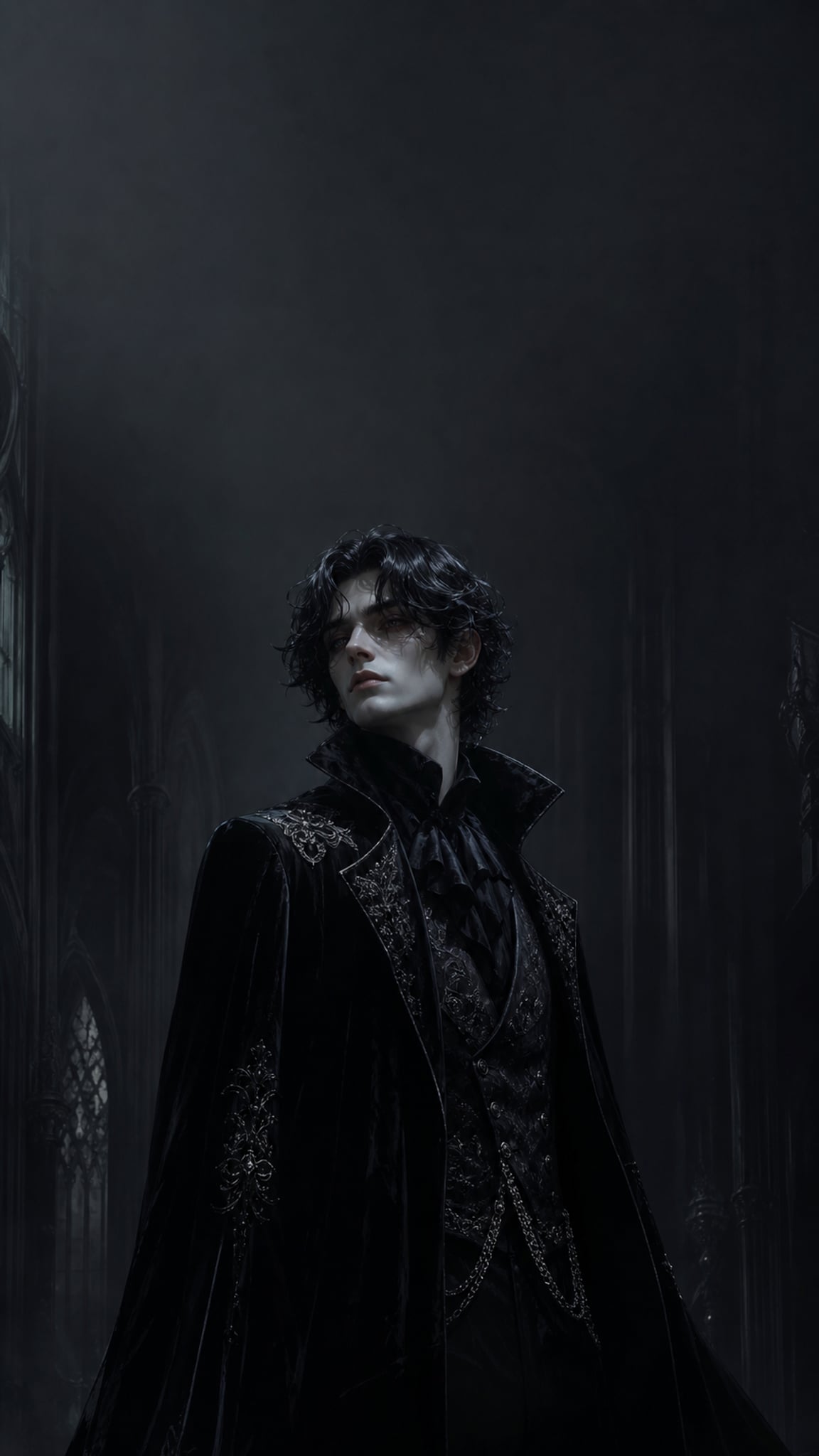
- Gothic and Collegiate Gothic architecture — arched windows, stone walls, old university campuses, classical columns
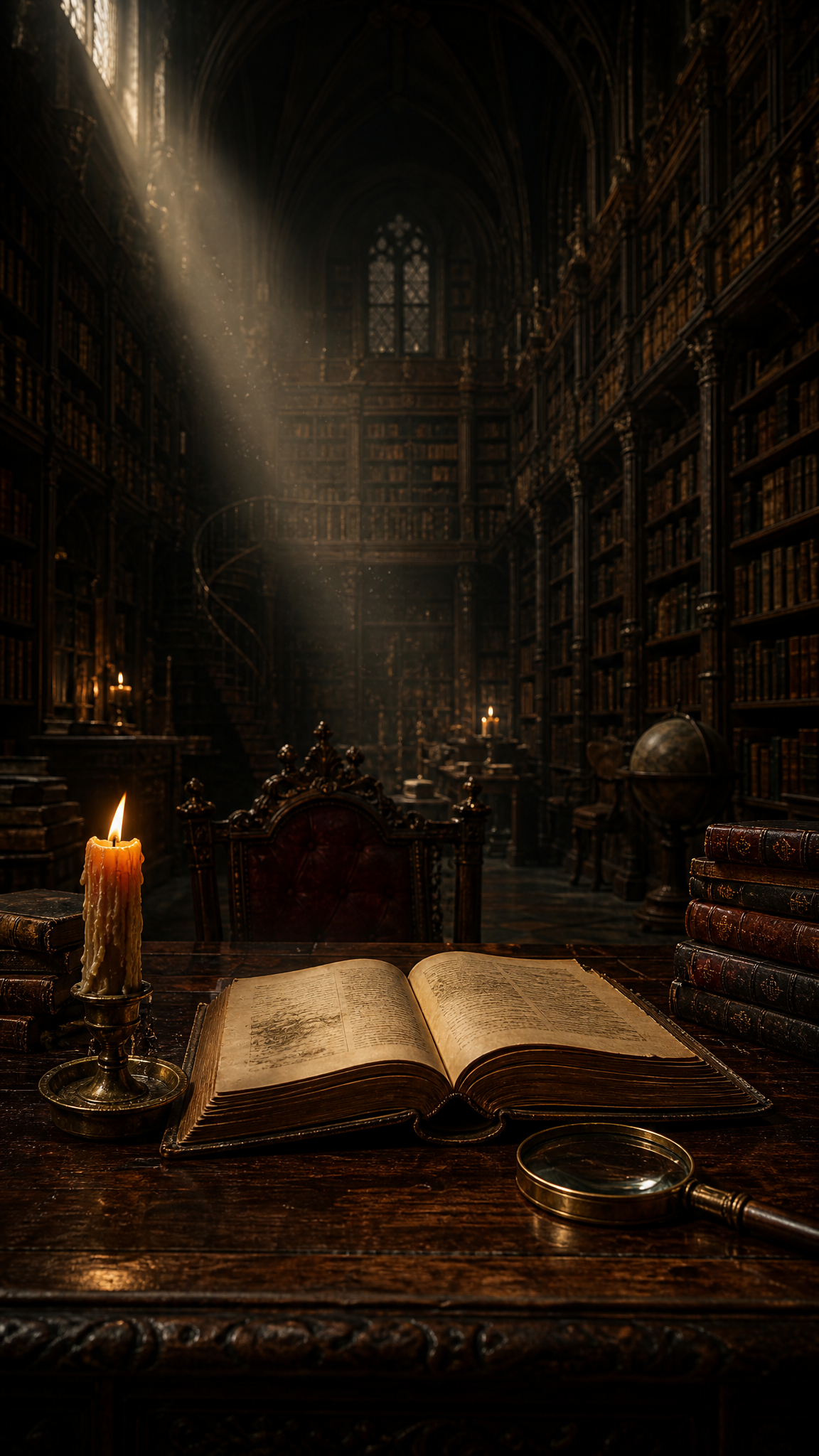
- Ornate library interiors — tall bookshelves, reading rooms, study halls with warm lighting
- Textures: tweed, houndstooth, leather (book bindings, bags), dark wood, aged paper, brass, candlewax, velvet
- Objects: stacked old books, handwritten letters, fountain pens, candelabras, classical sculpture, oil paintings
- Skull motifs (memento mori), Greek/Latin text fragments
- Autumn leaves, rain on old windows, fog and overcast skies
- Warm, low, moody lighting — candlelight, amber lamp glow, overcast autumn daylight filtering through tall windows
- Dense, cluttered interior compositions — studies, libraries, reading nooks
- Overall warm-dark atmospheric tonality
Casos de uso
Desktop (any ratio) — library interiors, misty campus quadrangles, and old book still-lifes make excellent backgrounds
Mobile (9:16) — vertical shots of Gothic architecture, tall bookshelves, or narrow candlelit corridors suit portrait orientation
Dark mode complement — naturally dark, warm palette integrates with dark-mode UI without harsh contrast
Seasonal use — strongest appeal in autumn/winter with autumn leaves, rainy windows, and foggy mornings
Study and productivity setups — aligns with 'study with me' culture; atmospheric but non-distracting
OLED/AMOLED screens — warm-dark palette with gold/amber highlights creates striking contrast on true-black displays
Estilos similares
Diferente de
Guía de prompt
Indicaciones para el prompt
- Start with a setting: 'old university library interior' or 'Gothic campus quadrangle in autumn fog' establishes the scene
- Specify lighting: 'warm candlelight,' 'amber lamp glow,' 'overcast autumn light through arched windows'
- Include signature objects: 'leather-bound books,' 'fountain pen on aged paper,' 'classical bust,' 'candelabra'
- Add atmospheric modifiers: 'moody,' 'warm-toned,' 'atmospheric,' 'autumn' for the right mood
- For architectural scenes: 'Collegiate Gothic,' 'stone arches,' 'Oxford/Cambridge style' for building references
- Always specify aspect ratio: '--ar 16:9' for desktop, '--ar 9:16' for phone
Consejos
- Internal editorial suggestion: 'Candlelight' or 'amber lamp glow' as lighting keywords are the most reliable way to get the warm-dark tonality right.
- Internal editorial suggestion: For desktop wallpapers, library interiors with depth (looking down long aisles of bookshelves) create excellent perspective compositions.
- Internal editorial suggestion: For phone wallpapers, vertical Gothic architecture (tall arched window, narrow corridor, bookshelf viewed from below) works best.
- Internal editorial suggestion: Add 'autumn' to any dark academia prompt — it anchors the seasonal mood and pulls in the right color palette automatically.
- Internal editorial suggestion: If results look too 'horror Gothic,' add 'warm,' 'intellectual,' 'scholarly' to soften toward academia rather than horror.
Palabras clave recomendadas
Evitar
Errores comunes
- Making the image too dark overall — dark academia is warm-dark, not black; amber and gold highlights are essential
- Producing generic Gothic/horror imagery — dark academia is intellectual and romanticized, not frightening
- Using cool-toned lighting — the warmth (candlelight, amber, gold) is critical to the aesthetic
- Making spaces too empty — dark academia interiors should feel dense with books, objects, and textures
- Neglecting the book/literary element — books and text are the core motif, not just architecture