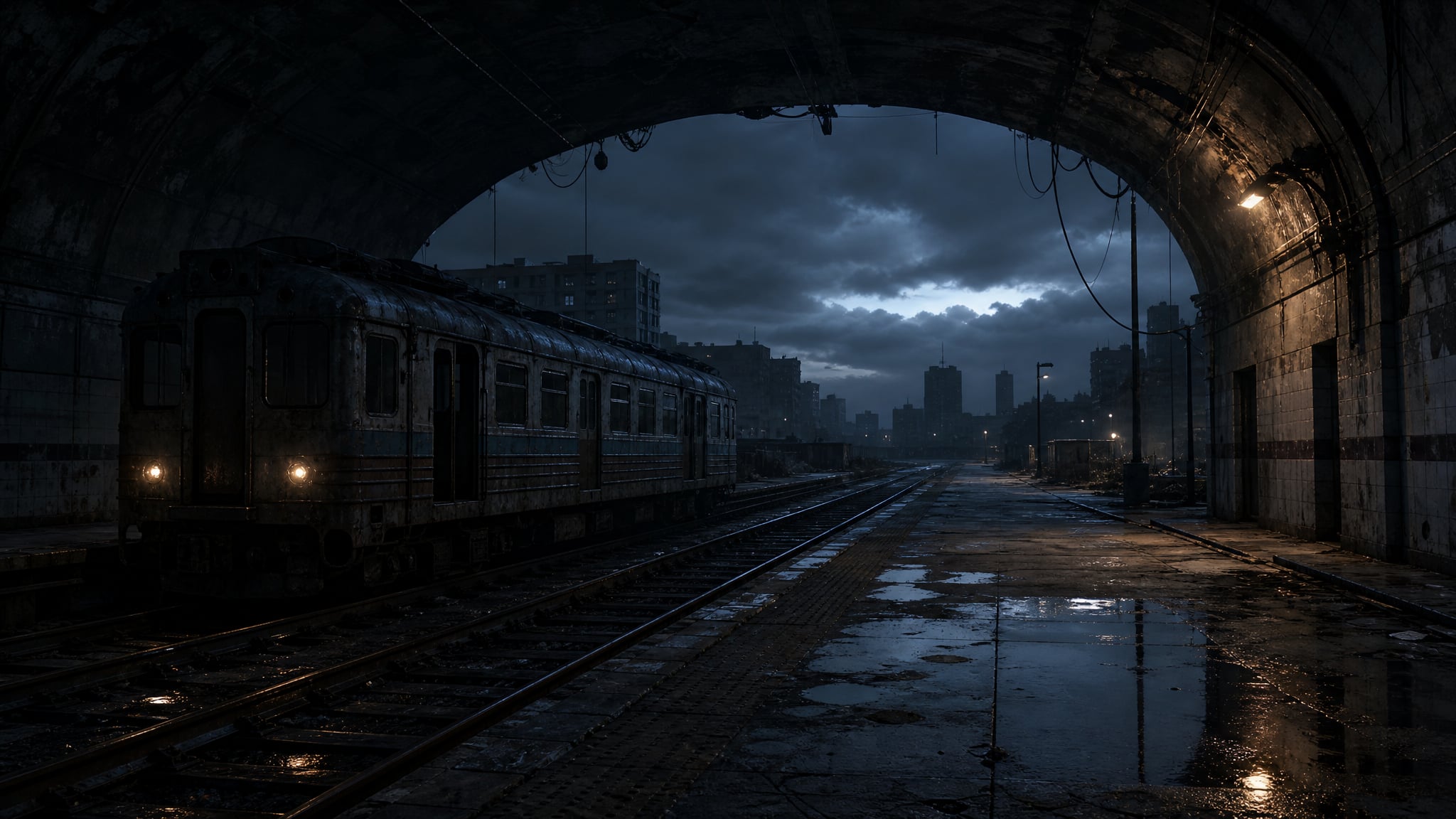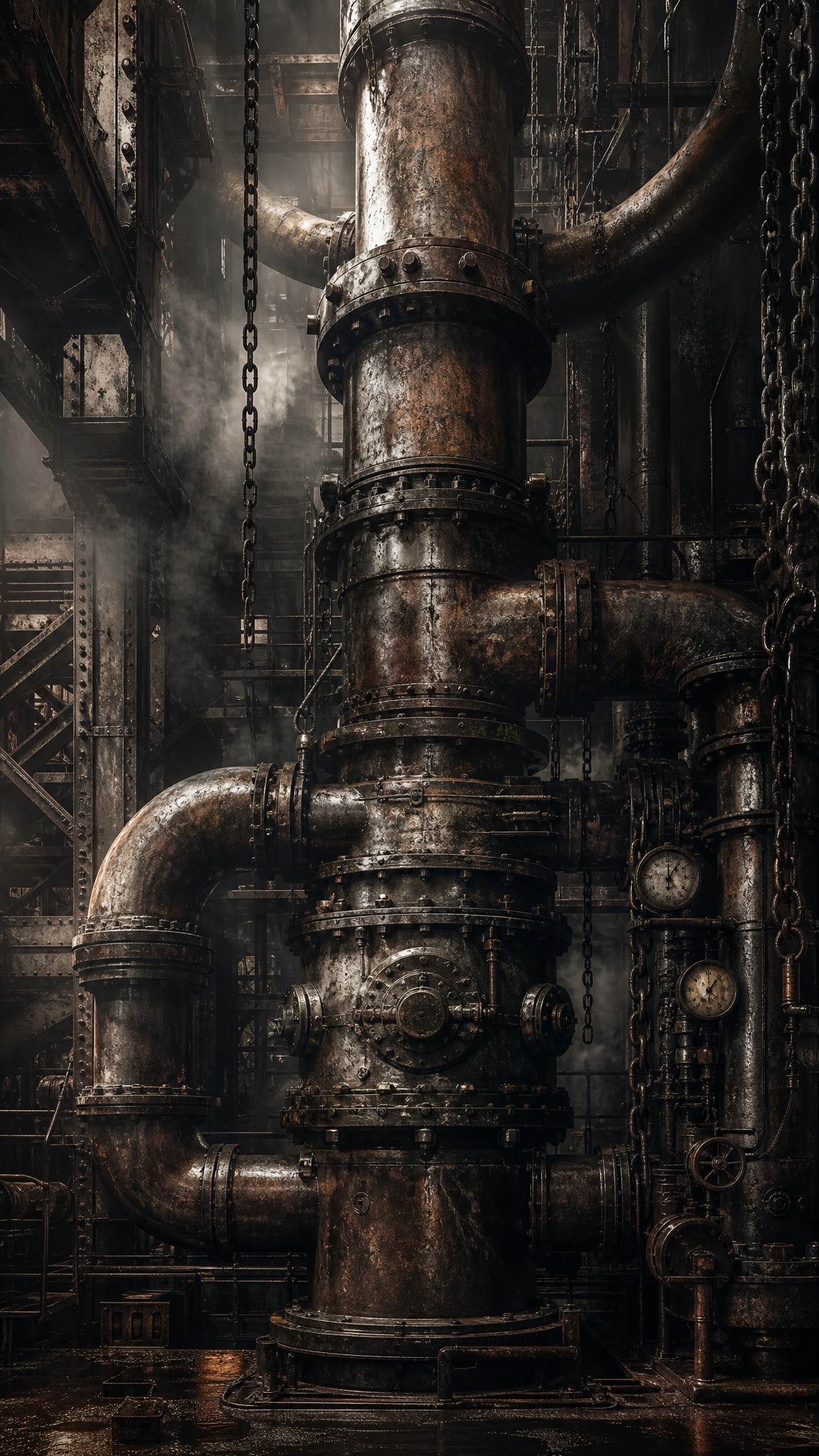
#Industrial
Industrial wallpapers celebrate the raw beauty of factories, warehouses, and manufacturing infrastructure — exposed steel beams, weathered concrete, massive turbines, and the geometric poetry of cooling towers and storage silos. This aesthetic draws from the documentary photography tradition pioneered by Bernd and Hilla Becher, finding elegance in functional structures that were never designed to be beautiful. As wallpaper art, the industrial style creates striking backdrops with strong geometric compositions, monochromatic or muted color palettes, and a powerful sense of scale that transforms utilitarian architecture into visual drama.
Acerca del arte de Industrial
Industrial architecture emerged during Britain's Industrial Revolution in the mid-1700s, with some of the earliest purpose-built industrial structures like Murrays' Mills in Manchester (begun 1797) becoming pioneering examples of modern architecture. The aesthetic appreciation of industrial structures was elevated to fine art by German photographers Bernd and Hilla Becher, who began systematically documenting disappearing industrial architecture in the Ruhr Valley in 1959, using a large-format camera to create objective typological studies of water towers, blast furnaces, gas tanks, and coal bunkers. Their work, which earned them the Erasmus Prize and Hasselblad Award, founded the Dusseldorf School of Photography and influenced generations of documentary photographers worldwide.
Rasgos visuales
- Exposed steel I-beams and structural framework
- Raw concrete and weathered brick surfaces
- Massive industrial machinery and turbines
- Geometric repetition of cooling towers, silos, and smokestacks
- Rust patina and oxidized metal textures
- Monochromatic or desaturated color palettes
- Dramatic scale contrasts between humans and structures
- Symmetrical typological compositions
- Atmospheric haze from steam, smoke, or dust
- Riveted metal plates and bolted connections
- Overhead crane systems and railway infrastructure
- Broken windows and urban decay details
Casos de uso
Loft apartment and converted warehouse living space desktop themes
Architecture and engineering professional workspace backgrounds
Photography enthusiast display screens celebrating structural beauty
Urban exploration and documentary culture lock screens
Creative studio backdrops for industrial design professionals
Dual-monitor panoramic factory interior or skyline compositions
Estilos similares
Diferente de
Guía de prompt
Indicaciones para el prompt
- Specify the type of industrial structure (e.g., 'abandoned steel mill', 'active oil refinery at dusk', 'grain elevator complex') for focused results
- Include material descriptors like 'riveted steel plates', 'poured concrete with formwork marks', 'corroded iron' for textural richness
- Reference lighting conditions: 'harsh overhead fluorescent', 'shaft of light through broken skylight', 'golden hour silhouette' to set mood
- Use compositional directives: 'Becher-style frontal typology', 'dramatic low angle', 'symmetrical interior perspective'
- Add atmospheric elements: 'steam venting from pipes', 'coal dust in air', 'rain-slicked concrete floor'
- Describe the state of the structure: 'operational with workers', 'recently abandoned', 'reclaimed by vegetation'
Consejos
- Internal editorial suggestion: cross-link industrial wallpapers with 'brutalist', 'urban', and 'monochrome' tag pages
- Internal editorial suggestion: abandoned vs. operational variants serve different audience segments — label clearly
- Internal editorial suggestion: Becher-style symmetrical compositions (frontal, centered, overcast sky) perform well as minimalist desktop backgrounds
- Internal editorial suggestion: interior shots with dramatic single-source lighting tend to get higher engagement than exterior shots
Palabras clave recomendadas
Evitar
Errores comunes
- Over-clean rendering: AI often produces pristine surfaces instead of the weathered, patinated textures that define industrial beauty
- Scale confusion: factory interiors without human or object scale references lose their dramatic impact
- Generic warehouse: results may look like stock real estate photos rather than artistic industrial compositions
- Missing atmospheric depth: industrial scenes need haze, steam, or dust particles to convey the environment's character