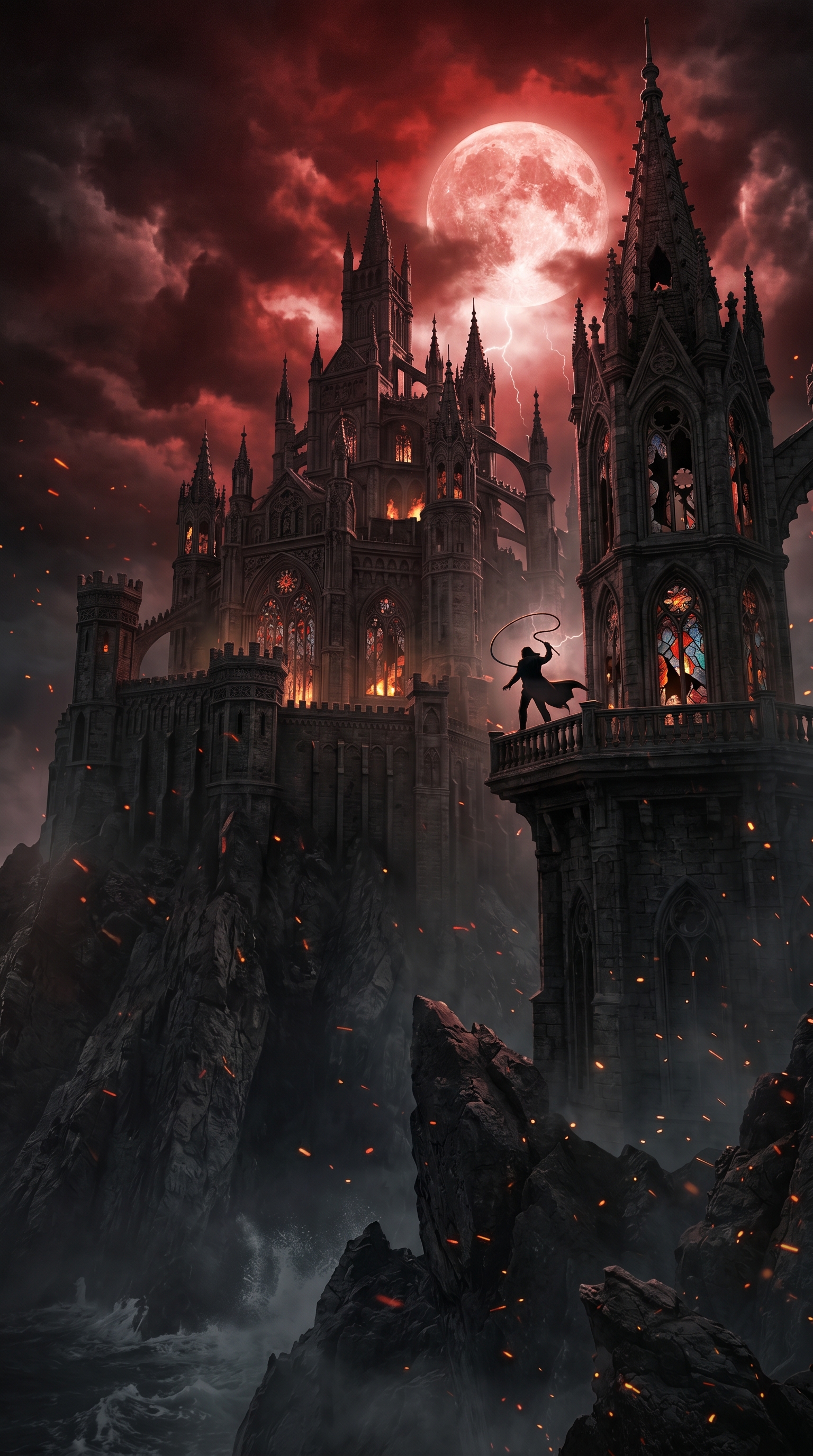
#Gothic
Gothic is a visual style rooted in medieval European architecture and art, defined by dramatic contrasts of light and shadow, pointed arches, intricate ornamental detail, and a brooding atmospheric mood. In the context of AI-generated wallpapers, Gothic imagery draws on cathedral silhouettes, stained glass color palettes, dark romantic landscapes, and ornate textures to produce striking, moody backgrounds suited for dark-mode setups and dramatic desktop aesthetics.
Acerca del arte de Gothic
The Gothic style originated in the early 12th century in northern France. Abbot Suger's renovation of the Abbey of Saint-Denis near Paris (1140-1144) is widely regarded as the birthplace of Gothic architecture, introducing structural innovations such as rib vaults, pointed arches, and flying buttresses that allowed buildings to reach unprecedented heights while flooding interiors with light through expansive stained glass windows. The style spread rapidly across Europe — from Chartres and Notre-Dame de Paris to Canterbury Cathedral and Westminster Abbey — and dominated Western art and architecture for nearly four centuries. The term 'Gothic' was coined disparagingly by Italian Renaissance writers who associated it with the 'barbaric' Germanic tribes, but the label stuck. In the mid-18th century, the Gothic Revival movement — pioneered by Horace Walpole at Strawberry Hill and championed by theorists John Ruskin and architect A.W.N. Pugin — brought medieval forms back into architecture and decorative arts, producing landmarks like the Houses of Parliament in London (1840). Today, Gothic aesthetic has evolved into a broad visual language encompassing dark romanticism, ornate typography, and atmospheric digital art, widely used in graphic design, fashion, gaming, and wallpaper imagery.
Rasgos visuales
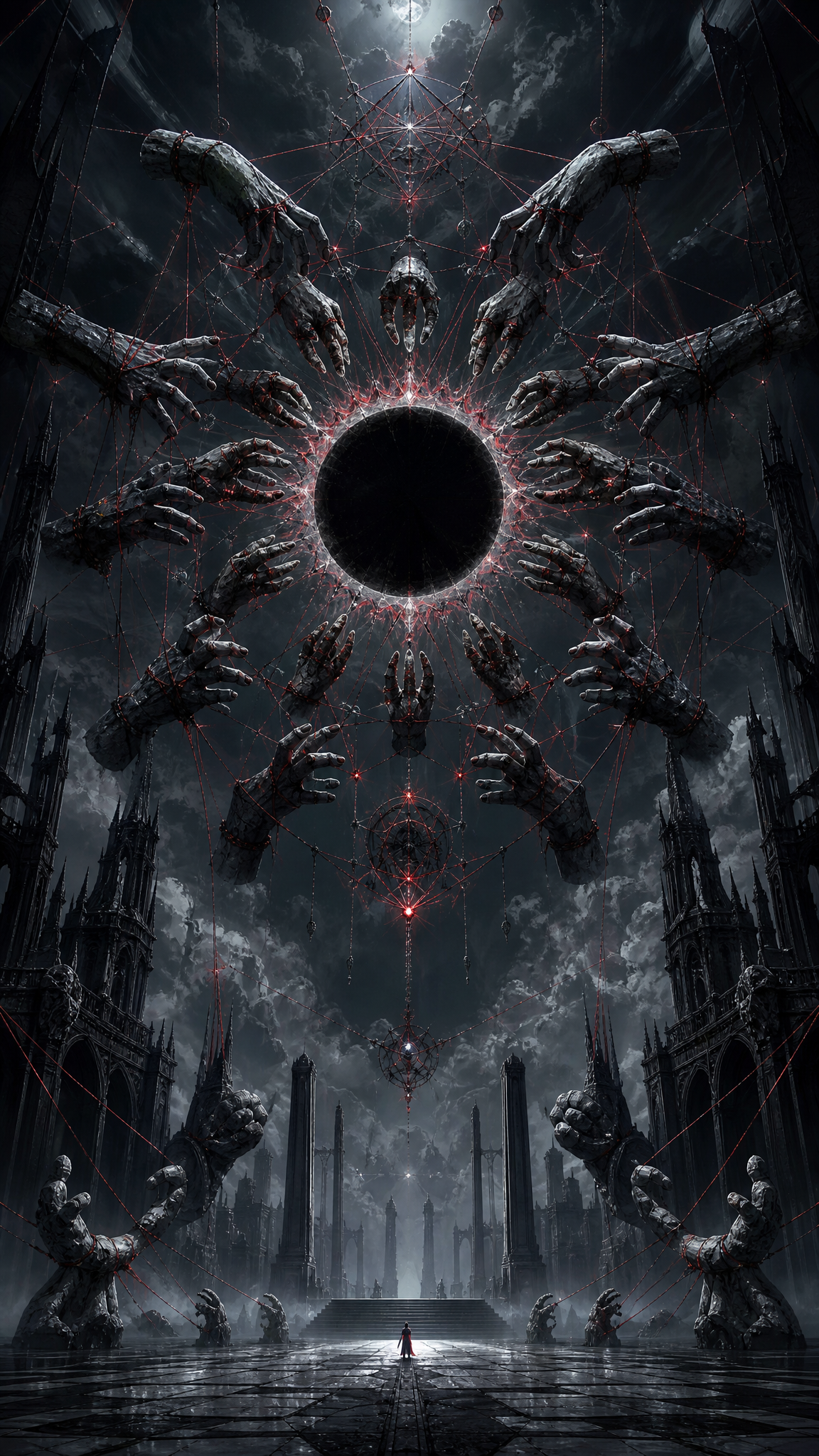
- Deep, dark color palettes dominated by black, charcoal, deep crimson, and midnight purple
- Dramatic chiaroscuro lighting — strong contrasts between light and shadow
- Pointed arches, ribbed vaults, and flying buttress silhouettes drawn from cathedral architecture
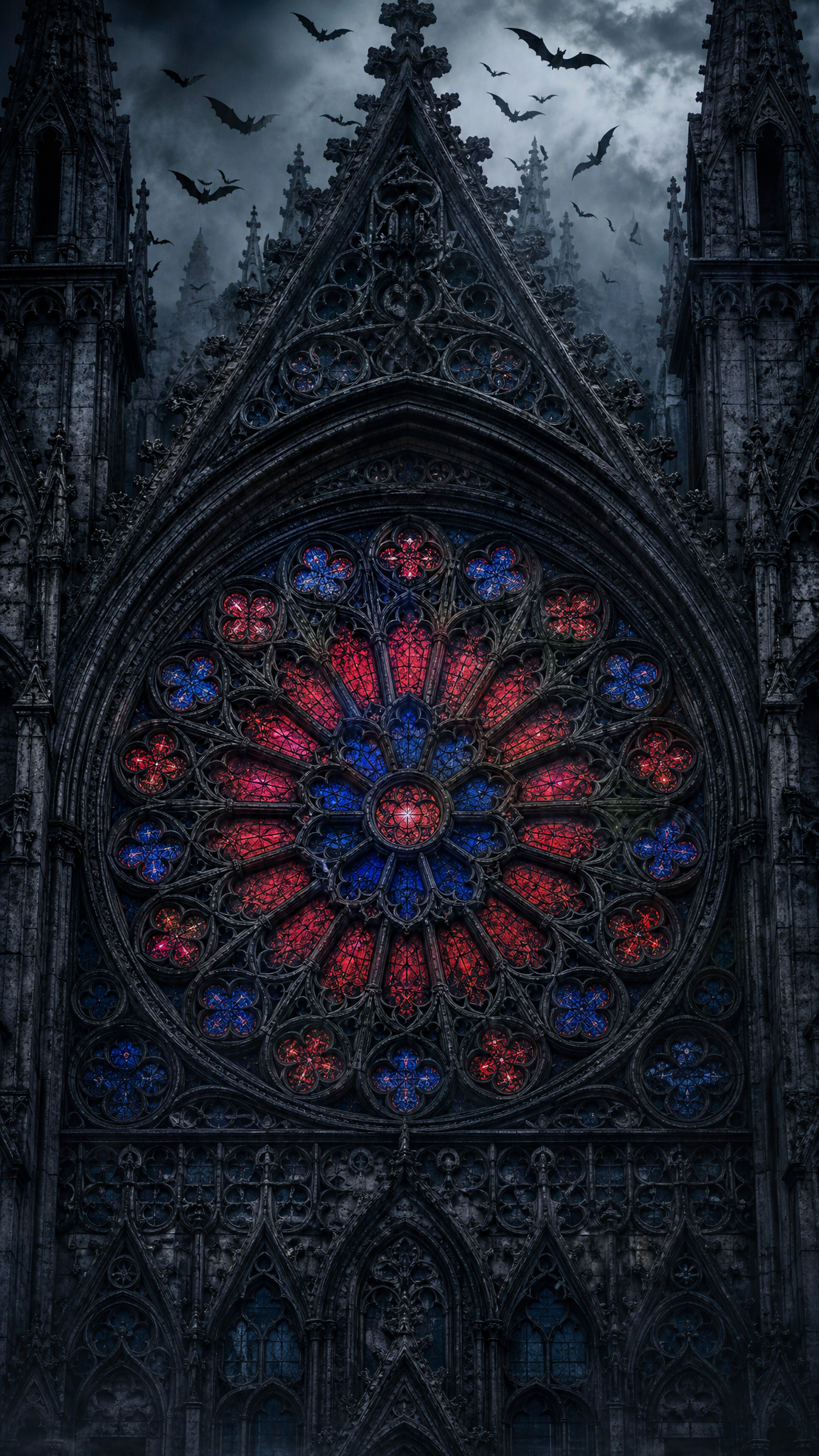
- Stained glass color effects — rich jewel tones (sapphire, ruby, emerald) glowing against dark backgrounds
- Ornate and intricate decorative details — filigree, tracery, ironwork patterns
- Rose windows and quatrefoil geometric motifs
- Atmospheric fog, mist, and moody skies suggesting mystery and melancholy
- Blackletter and ornamental serif typography
- Recurring symbols: gargoyles, ravens, skulls, candelabras, thorned roses, crescent moons
- Vertical emphasis and towering compositions that convey grandeur and awe
- Stone and aged material textures — weathered walls, moss-covered surfaces, wrought iron
Casos de uso
Desktop and laptop wallpapers for dark-mode enthusiasts seeking dramatic, atmospheric backgrounds
Phone lock screens with moody Gothic motifs for a distinctive personal aesthetic
Gaming setup backgrounds — complements RPG, horror, and dark fantasy gaming environments
Dual-monitor and ultrawide displays where sweeping cathedral panoramas or Gothic landscapes fill the frame
Seasonal and Halloween-themed device customization
Creative workspace backgrounds for designers and artists working in dark, editorial, or horror genres
Tablet and e-reader backgrounds for readers of Gothic fiction and dark romance
Estilos similares
Diferente de
Guía de prompt
Indicaciones para el prompt
- Lead with architectural elements: 'Gothic cathedral interior,' 'pointed arch corridor,' 'flying buttress silhouette against moonlight'
- Specify lighting mood: 'dramatic chiaroscuro,' 'candlelit,' 'moonlight filtering through stained glass,' 'foggy twilight'
- Combine setting and atmosphere: 'abandoned Gothic abbey in dense fog,' 'gargoyle perched on cathedral rooftop at night'
- Use material descriptors: 'weathered stone walls,' 'wrought iron gates,' 'crumbling marble columns with ivy'
- Reference color direction explicitly: 'deep crimson and black palette,' 'jewel-toned stained glass glow on dark stone'
Consejos
- Add 'highly detailed, 8K' or 'intricate ornamental detail' to preserve the fine tracery and texture Gothic demands
- Specify aspect ratio — vertical/portrait crops (9:16, 2:3) suit Gothic's soaring compositions; ultrawide (21:9) works for panoramic cathedral interiors
- Layer depth cues: foreground elements (iron gate, archway frame) with background depth (distant nave, foggy corridor) create immersive wallpapers
- Reference specific real-world inspirations when possible: 'in the style of Chartres Cathedral stained glass' or 'Notre-Dame gargoyle perspective'
- Combine Gothic with a secondary modifier for unique results: 'Gothic + underwater ruins,' 'Gothic + winter forest,' 'Gothic + celestial night sky'
Palabras clave recomendadas
Evitar
Errores comunes
- Over-darkening the entire image so all detail is lost — Gothic needs contrast, not uniform blackness
- Generic 'spooky' results that read as Halloween clip-art rather than architectural Gothic
- Mixing too many horror elements (blood, gore) which shifts from Gothic atmosphere to shock imagery
- Ignoring vertical composition — Gothic architecture's defining trait is upward thrust; horizontal framing often flattens the mood
- Producing blurry or muddy textures instead of the crisp ornamental detail that defines Gothic surfaces