#Synthwave
Synthwave is a retro-futuristic visual and musical aesthetic that emerged in the mid-to-late 2000s, celebrating 1980s pop culture with sincere nostalgia. Visually defined by dark backgrounds contrasted with vivid neon accents — magenta, cyan, and violet — the style features iconic motifs like the striped 'retrosun,' perspective neon grids, 1980s supercars, and chrome typography. As a wallpaper style, synthwave delivers dramatic, cinematic compositions with strong vanishing-point perspectives, making it one of the most popular desktop wallpaper aesthetics, especially for gaming and entertainment setups.
About Synthwave Art
Synthwave emerged from French house music producers in the mid-to-late 2000s. The 2002 video game Grand Theft Auto: Vice City, with its 1980s Miami setting and period soundtrack, was a key catalyst that inspired early producers. Kavinsky, a French producer, was among the earliest synthwave artists; his 2013 album 'OutRun' crystallized the aesthetic. The genre's name evolved from earlier terms — 'outrun' and 'outrun electro' were more common in the early days, with 'synthwave' overtaking them in popularity around 2014. The term 'outrun' itself derives from the 1986 Sega arcade racing game Out Run. No authoritative source identifies a specific coiner of the term 'synthwave.' The 2011 film Drive (dir. Nicolas Winding Refn), which featured Kavinsky's 'Nightcall,' catapulted synthwave to mainstream recognition. Musical reference points include John Carpenter film scores, Jean-Michel Jarre, Vangelis (especially the Blade Runner soundtrack, 1982), and Tangerine Dream. The genre remained primarily underground until The Weeknd's 'Blinding Lights' (2020), a synthwave-influenced track, topped US charts.
Visual Traits
- Dark base tones — black, deep blue, deep purple — as foundation
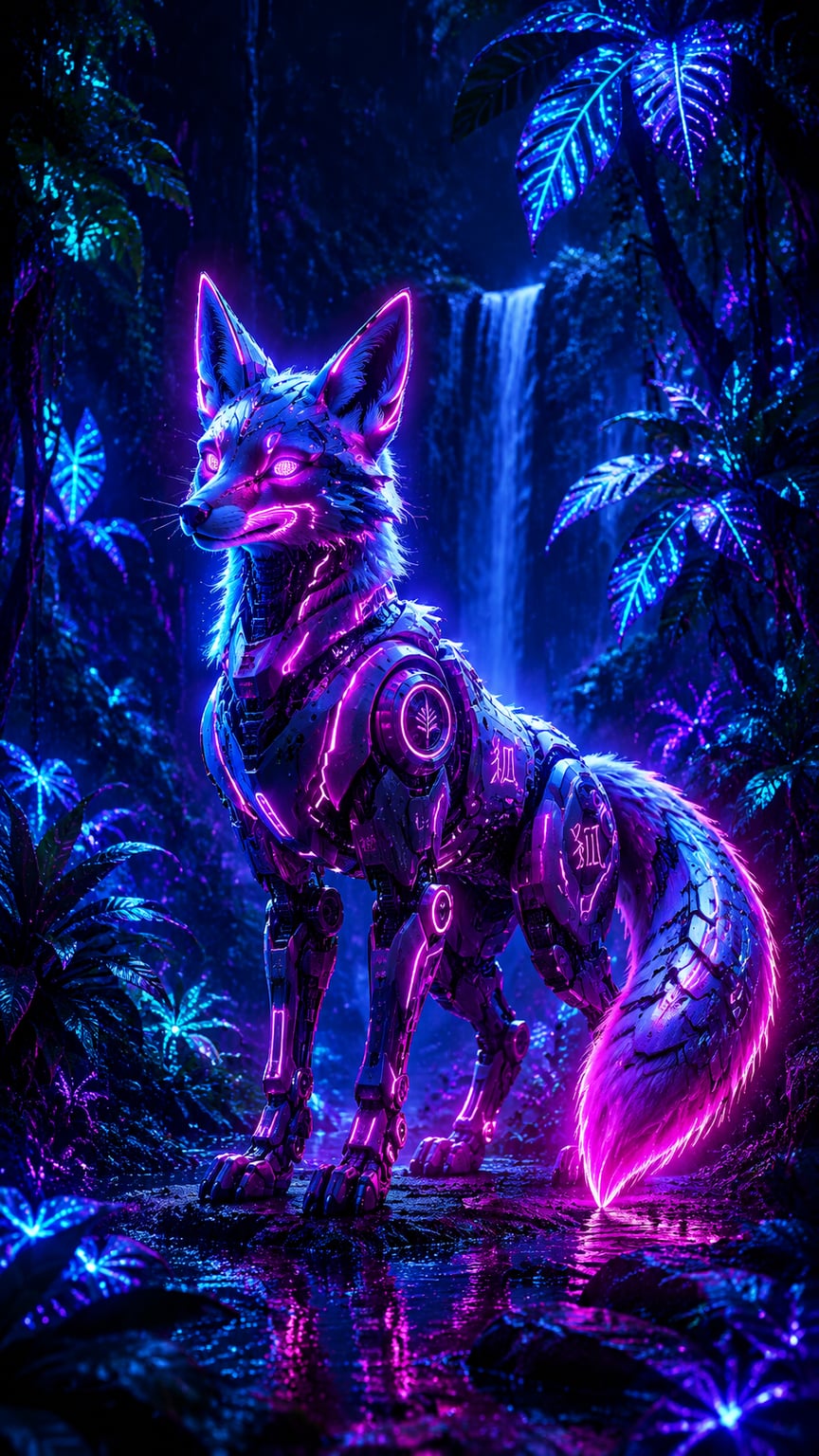
- Bright neon accents in magenta/hot pink, electric cyan, violet, and occasionally neon orange or gold
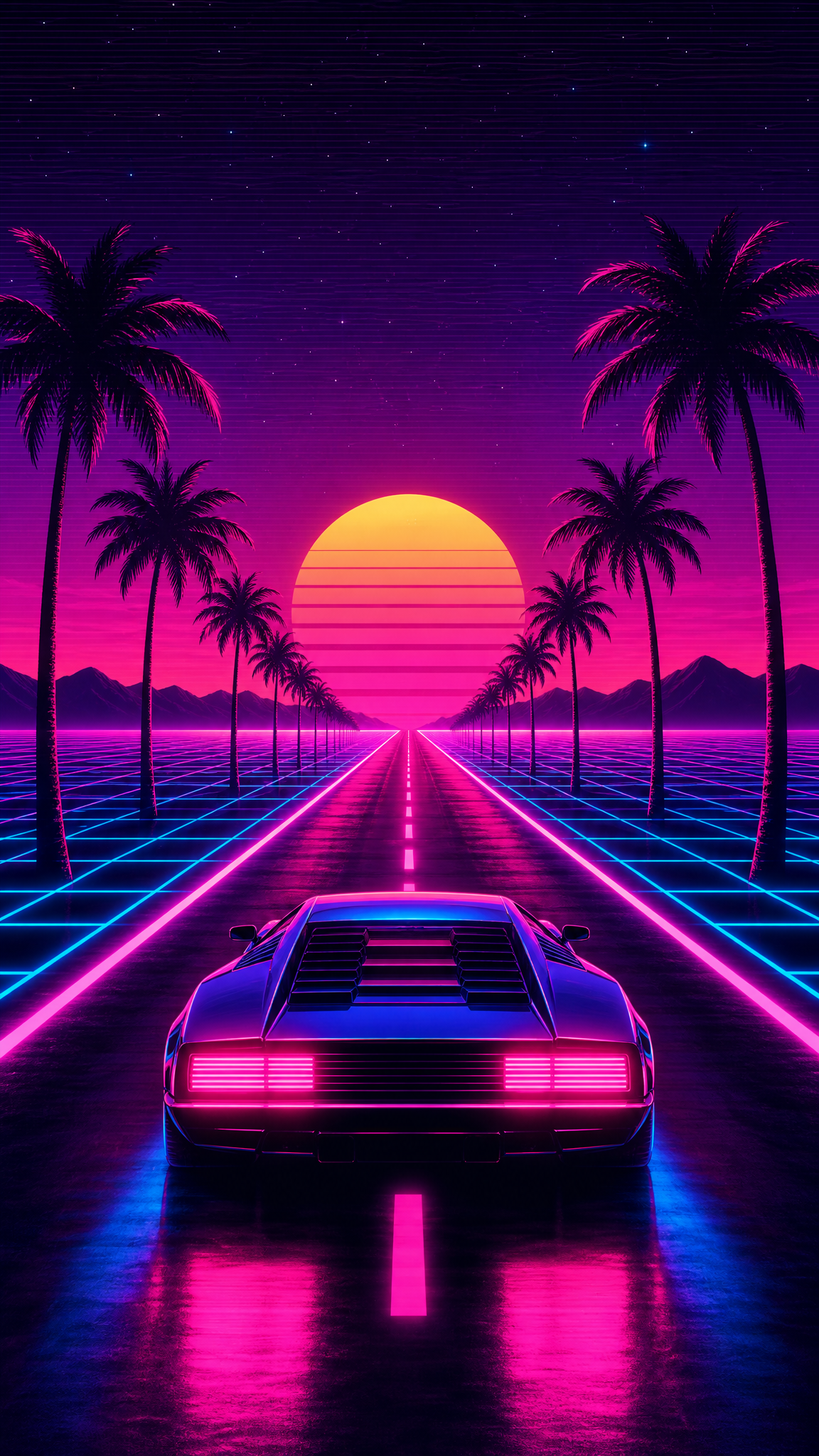
- The 'Retrosun' — a setting sun with horizontal stripes, gradient from bright yellow to deep magenta (the single most iconic synthwave symbol)
- Laser/neon grid — a glowing perspective grid plane extending to a vanishing point, representing digital landscape
- Wireframe landscapes and low-polygon 3D graphics
- 1980s supercars — Ferrari Testarossa, Lamborghini Countach, DeLorean DMC-12
- Palm trees silhouetted against neon skies
- Chrome typography and metallic beveled lettering
- VHS tracking artifacts and film grain textures
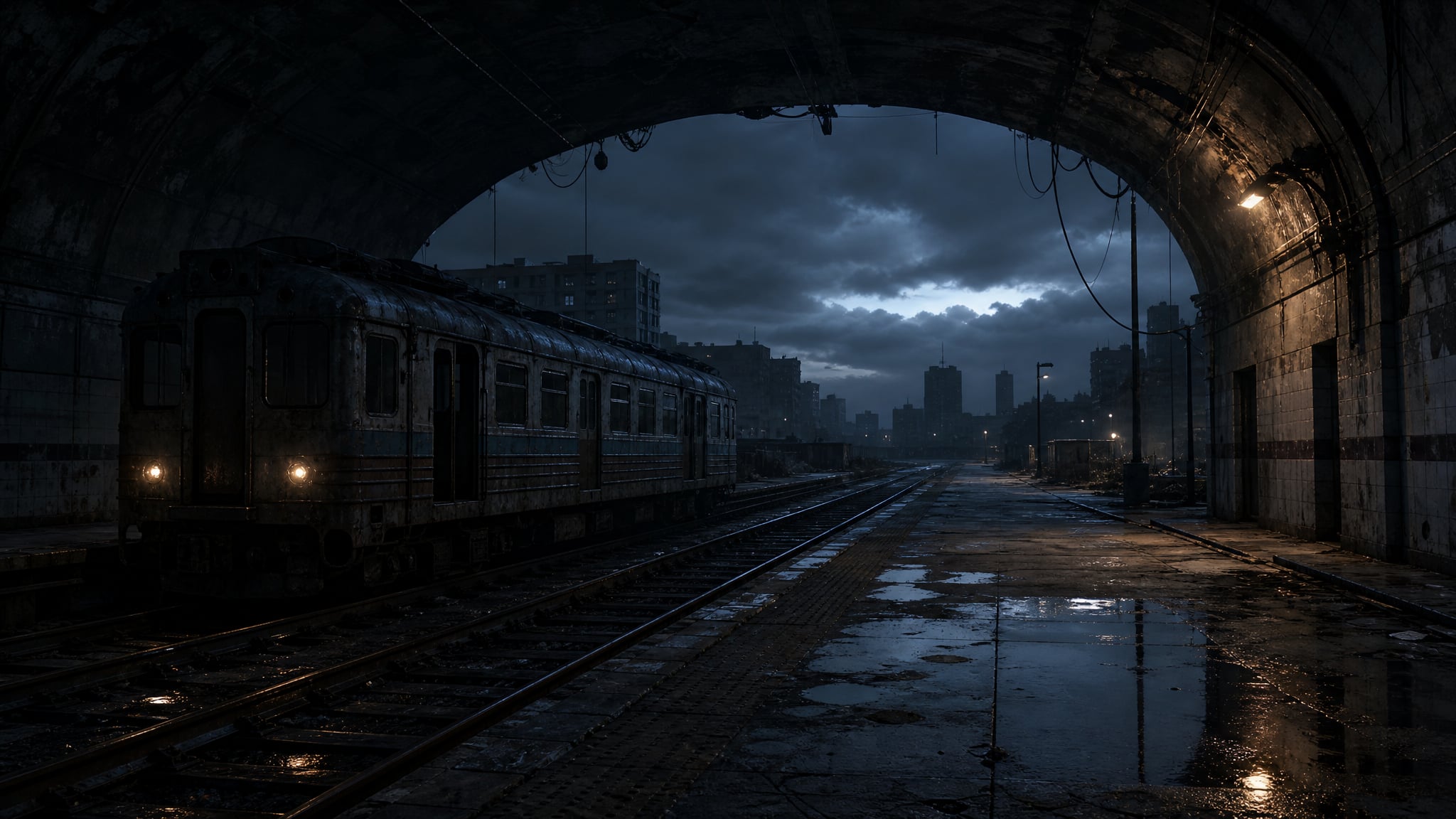
- Night cityscapes with neon signage and dramatic lighting
- Strong vanishing-point perspective composition — cinematic and dramatic
- High-contrast 'neon noir' atmosphere
Use Cases
Desktop widescreen (16:9) — the perspective-grid-to-horizon composition is inherently landscape-oriented
Ultrawide monitors (21:9, 32:9) — particularly strong; the horizontal horizon and vanishing-point compositions stretch naturally
Multi-monitor and gaming setups — dark base tones with neon accents complement RGB lighting
Phone screens (9:16) — vertical neon cityscapes, chrome typography on dark backgrounds
OLED/AMOLED screens — true black areas save battery while neon accents pop vividly
Dark mode desktop themes — neon-on-dark palette complements system dark mode
Similar Styles
Different From
Prompt Guide
Prompt Directions
- Start with the classic scene: 'synthwave sunset over neon grid landscape' or 'retro car driving toward neon horizon'
- Specify the color palette: 'magenta and cyan neon on dark background,' 'neon purple and pink sunset'
- Include iconic motifs: 'retrosun with horizontal stripes,' 'perspective neon grid,' 'DeLorean silhouette'
- Add atmosphere: 'cinematic,' '80s retro-futuristic,' 'neon noir' to reinforce the mood
- For variety, try different subjects: 'synthwave city skyline,' 'mountain with neon grid,' 'palm tree boulevard at night'
- Always specify aspect ratio: '--ar 16:9' for desktop, '--ar 9:16' for phone, '--ar 21:9' for ultrawide
Tips
- Internal editorial suggestion: The retrosun + grid combo is the most reliable starting point. Master this composition first, then vary from there.
- Internal editorial suggestion: Add 'cinematic' or 'anamorphic' modifiers for the widescreen film look that defines synthwave visual media.
- Internal editorial suggestion: For phone wallpapers, use vertical compositions — a neon city viewed from street level looking up, or a vertical chrome text logo on dark background.
- Internal editorial suggestion: Layer your prompt — environment first (grid, horizon), then lighting (neon colors), then details (car, palms). This gives the model a clear hierarchy.
- Internal editorial suggestion: Adding 'VHS grain' or 'film grain' as a final modifier adds authentic retro texture without overwhelming the neon clarity.
Recommended Keywords
Avoid
Common Failures
- Using pastel tones instead of saturated neons on dark — accidentally produces vaporwave instead of synthwave
- Prompting only 'synthwave' without specifying composition — produces generic, unfocused results
- Making the image too bright overall — synthwave needs deep darks for the neon to contrast against
- Overcrowding the scene — the best synthwave compositions have clean perspective lines and focused focal points
- Forgetting the horizon/vanishing point — the perspective composition is a defining structural element