#Halftone
1Wallpapers
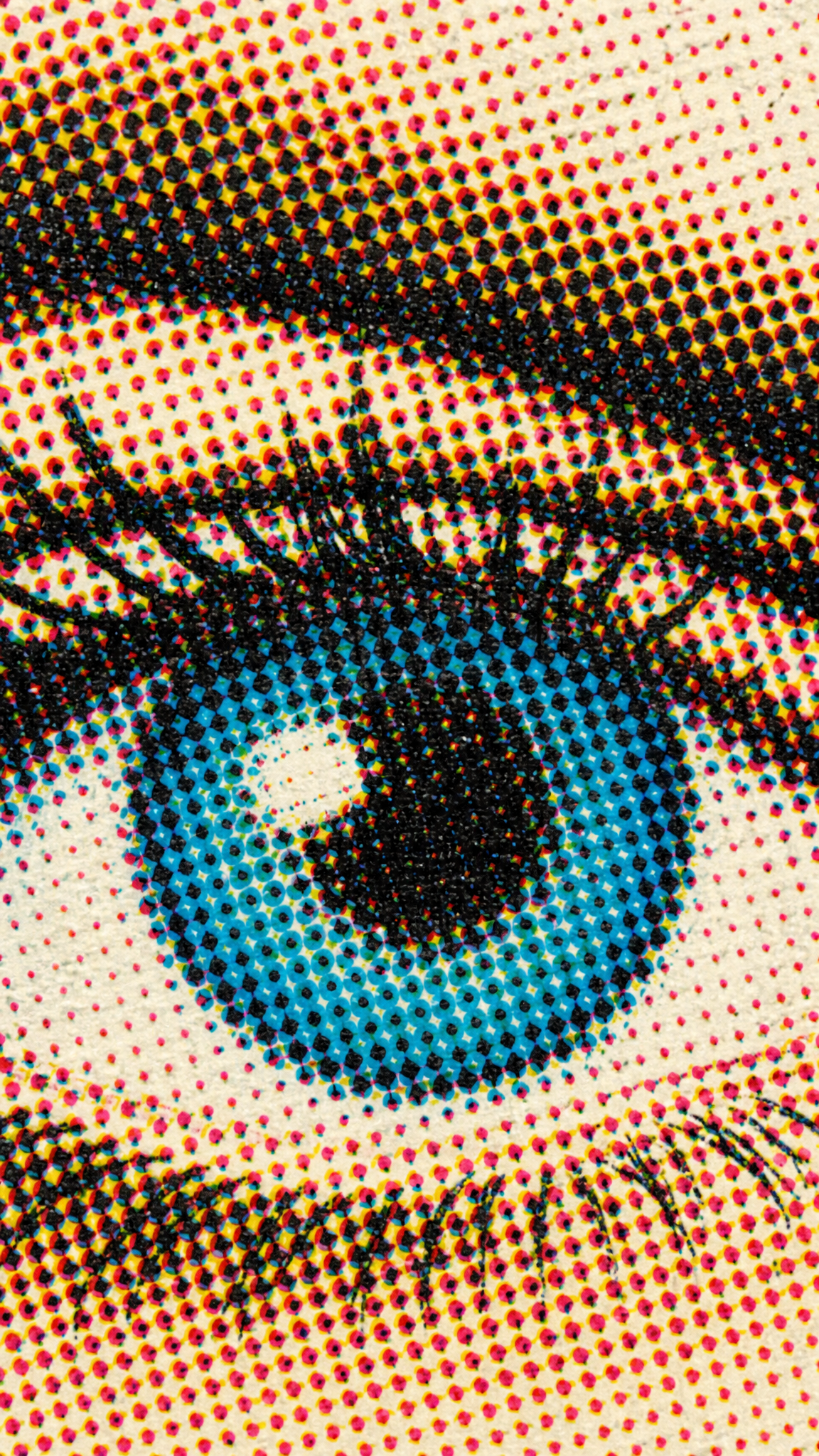
Halftone wallpapers turn printed dot logic into a visible design feature: Ben-Day dots, screen-like gradients, and a graphic surface that feels both mechanical and pop-cultural.
Visible dot grids that create tone by de…Print-like gradients rather than smooth …Comic and pop-art associations through B…A surface that feels mechanical, graphic…
About Halftone Art
The verified sources make halftone one of the easier styles to defend. Britannica establishes the printing-process history, and MoMA anchors Ben-Day dots as a museum-recognized art term tied to Pop Art. That gives halftone a clear bridge from industrial print technology to modern visual style.
Visual Traits
- Visible dot grids that create tone by density or scale
- Print-like gradients rather than smooth digital shading
- Comic and pop-art associations through Ben-Day dots
- A surface that feels mechanical, graphic, and reproducible
Use Cases
Pop-culture wallpapers with comic energy
Poster backgrounds with printed texture
Retro graphic packs and editorial covers
Phone backgrounds using large-scale dot gradients
Similar Styles
pop art — both use dots and print energy, but halftone is the process language itself
comic book — both can share Ben-Day logic, though halftone is broader than comics
Different From
gradient — halftone makes the tonal mechanism visible
minimalist — halftone adds texture and print structure
Prompt Guide
Prompt Directions
- Call out halftone or Ben-Day dots explicitly
- Define whether the dots should be subtle texture or dominant pattern
- Use poster, comic, print, and screen words to keep the result graphic
- If the dots vanish, increase scale or contrast so the print logic stays visible
Tips
- Internal editorial suggestion: Halftone wallpapers work best when one visual system stays dominant instead of splitting attention across too many motifs.
- Internal editorial suggestion: specify crop intent early because phone wallpapers usually need one stronger vertical anchor than desktop versions.
- Internal editorial suggestion: cross-link this style with pop-art only when the user intent clearly overlaps.
- Internal editorial suggestion: keep factual claims inside the verified evidence boundary and treat prompt advice as editorial guidance only.
Recommended Keywords
halftone wallpaperBen-Day dotsdot gradientcomic print texturescreen-tone surface
Avoid
perfect smooth shadingphotoreal skin texturesoft airbrush blur
Common Failures
- The dots are too small to read as a style
- The image turns into generic pop art without clear halftone structure
- Too many colors reduce the print-like discipline
Explore Styles

FAQ
What defines Halftone wallpapers?
Halftone wallpapers turn printed dot logic into a visible design feature: Ben-Day dots, screen-like gradients, and a graphic surface that feels both mechanical and pop-cultural.
How is Halftone different from pop-art?
Halftone can overlap with pop-art, but it works best when its own core cues stay dominant rather than borrowing the full logic of adjacent styles.
How do I prompt AI for stronger Halftone wallpapers?
Start with the scene or focal object, then add the lighting, texture, and atmosphere cues that make the style recognizable.
When does Halftone fail as a wallpaper style?
It usually fails when it drifts too far toward smooth gradient or when the scene loses one clear focal system for color, shape, or texture.