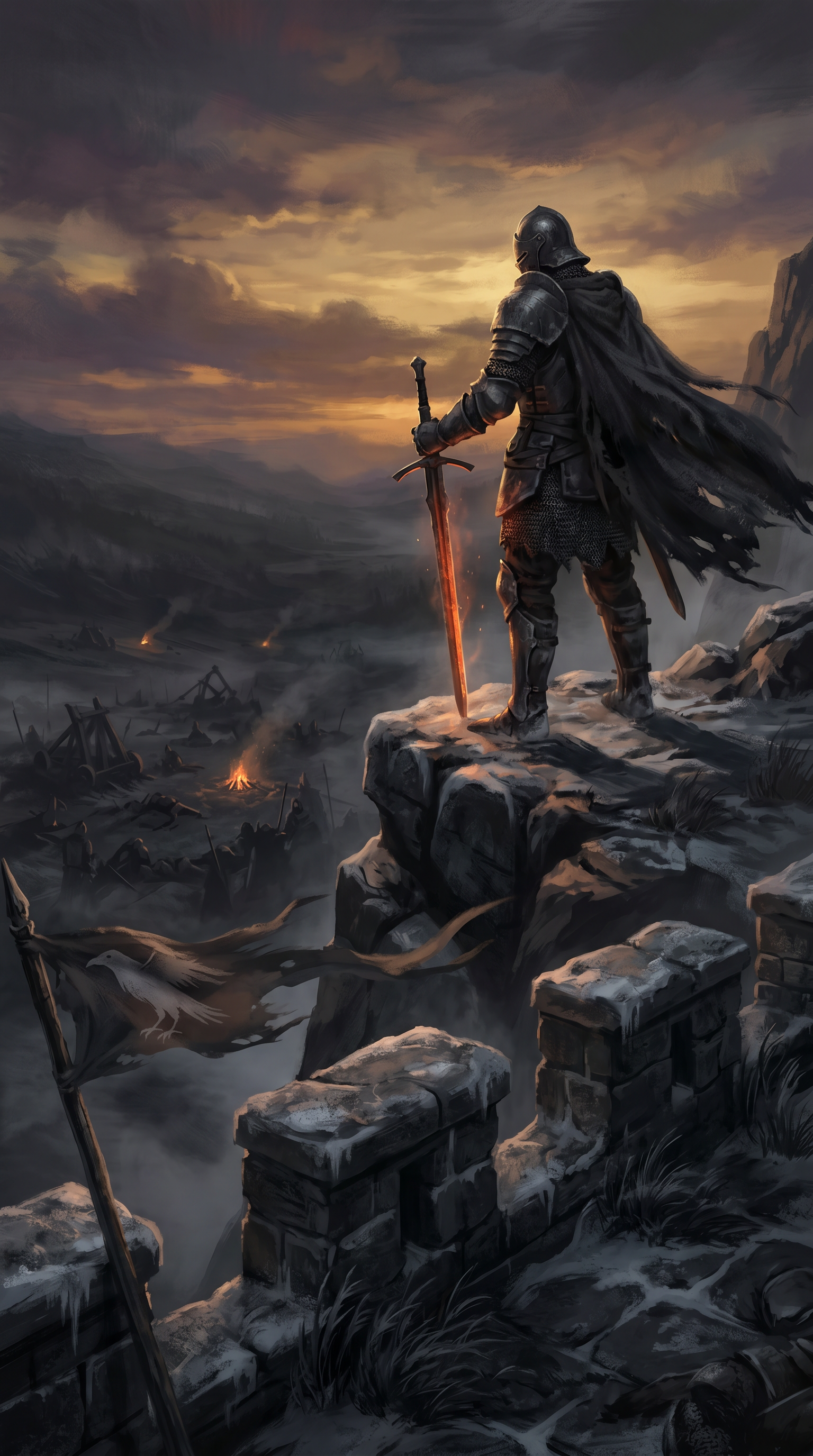
#Medieval
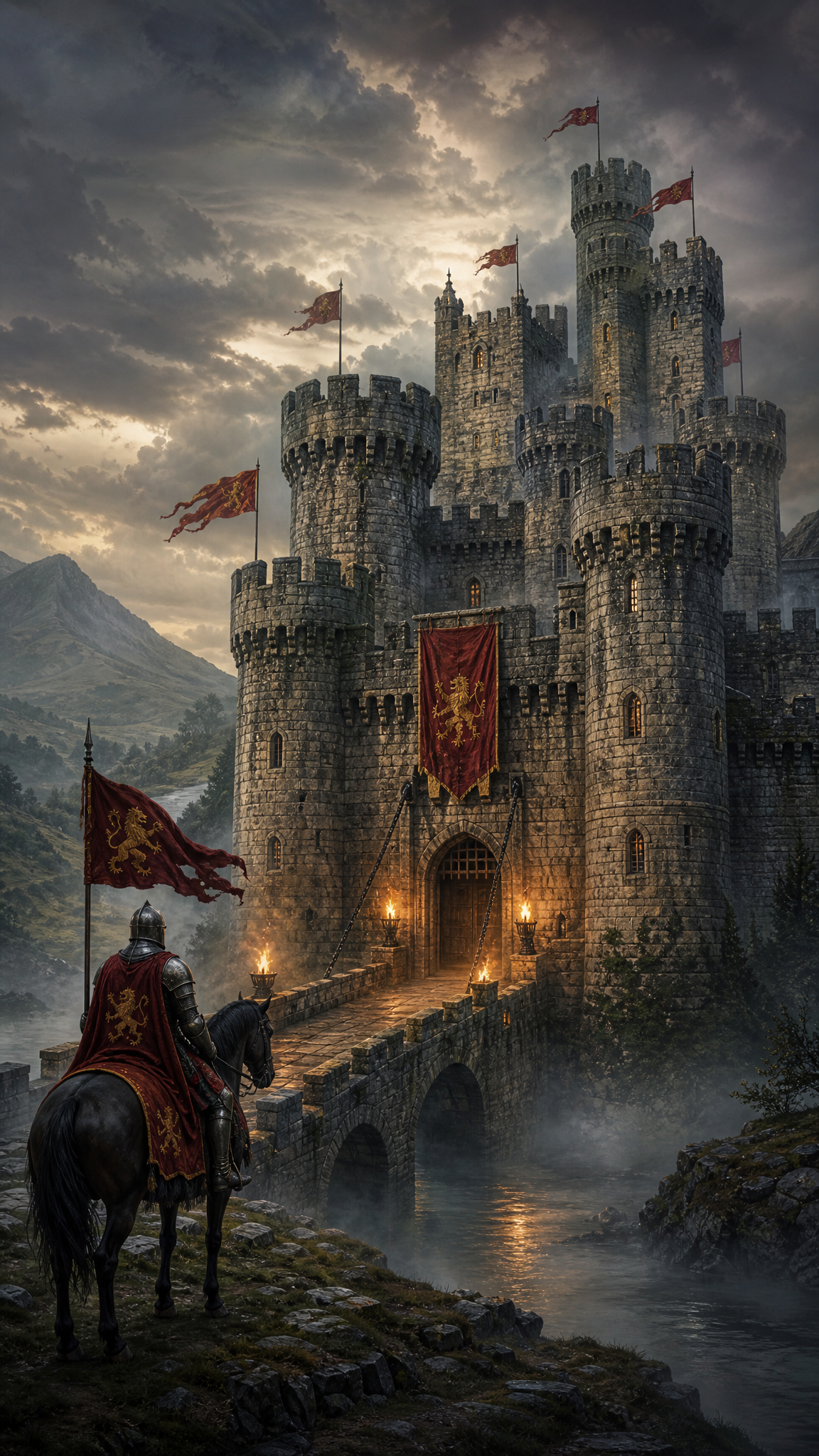
Medieval art spans roughly a millennium of European visual culture from the 5th to the 15th century, encompassing Byzantine, Romanesque, and Gothic traditions. In wallpaper and digital art contexts, the medieval aesthetic draws on gold-leaf illumination, intricate interlace patterns, heraldic shields, stained-glass color palettes, and the flattened perspective characteristic of manuscript painting. The result is richly decorative, symbolically layered, and unmistakably historical, lending depth and gravitas to any screen.
About Medieval Art
Medieval art spans the long period between late antiquity and the Renaissance. The Metropolitan Museum of Art describes it as beginning in the catacombs of Rome and culminating more than a thousand years later in Gothic cathedrals, encompassing Byzantium as well as Carolingian, Ottonian, Romanesque, and Gothic traditions. Britannica dates Byzantine art from its 6th-century codification in Constantinople, Romanesque art from about 1000 to 1150, and Gothic art from the mid-12th century to the end of the 16th century. Across these phases, religious subject matter, monumental architecture, gold-ground imagery, and richly decorated books remained central. Getty's illuminated-manuscript guide also shows how medieval workshops relied on parchment, gold and silver, and prized pigments such as ultramarine and vermilion, which is why modern medieval-inspired wallpapers usually emphasize jewel tones, ornament, and symbolic rather than naturalistic space.
Visual Traits
- Gold-leaf backgrounds and gilded ornamental borders derived from illuminated manuscripts
- Flattened or hierarchical perspective where scale reflects symbolic importance, not physical distance
- Rich jewel-tone palettes: deep blues (ultramarine), crimson, emerald, and burnished gold
- Intricate interlace, knotwork, and geometric border patterns from Insular and Celtic traditions
- Heraldic motifs: shields, crests, lions, eagles, and fleur-de-lis
- Pointed Gothic arches, tracery, and rose-window geometries
- Religious and symbolic iconography: saints, halos, evangelist symbols (lion, eagle, ox, angel)
- Dense decorative fills with minimal empty space, emulating manuscript page borders
- Romanesque rounded arches and heavy stone-like textures
- Calligraphic letterforms and decorative initials integrated into the composition
- Tapestry-like composition with repeating narrative panels or registers
Use Cases
Desktop wallpapers with ornate border framing that accommodates icon placement in the center
Phone lock screens featuring a central heraldic emblem or illuminated initial on a gold ground
Ultrawide displays suited to tapestry-style panoramic compositions with repeating motifs
Dual-monitor setups where a continuous manuscript-border design spans both screens
Dark-mode desktops using deep jewel tones and gold accents for a rich, non-fatiguing backdrop
Seasonal or thematic collections evoking historical drama, chivalry, or ecclesiastical grandeur
Similar Styles
Different From
Prompt Guide
Prompt Directions
- Anchor the style explicitly: 'medieval illuminated manuscript style,' 'Gothic cathedral stained glass,' or 'Romanesque tapestry composition'
- Specify the sub-period if you want precision: 'Byzantine gold mosaic,' 'Insular Celtic knotwork,' or 'Late Gothic Book of Hours'
- Request material textures: 'parchment texture,' 'gold leaf accents,' 'aged vellum background,' or 'stone relief carving'
- Control the palette: 'ultramarine and gold,' 'jewel-tone stained glass palette,' or 'muted earth tones with gilded highlights'
- For wallpaper usability, ask for 'ornate border framing open center' or 'decorative margin with breathing room for icons'
- Add composition direction: 'heraldic symmetry,' 'manuscript page layout,' or 'tapestry-style horizontal narrative band'
Tips
- Internal editorial suggestion: The strongest medieval wallpapers use a manuscript-page structure: dense ornamental border framing a simpler central field, which also solves the desktop-usability problem.
- Internal editorial suggestion: Gold-on-deep-blue is the single most recognizable medieval color combination and reliably produces high-impact results.
- Internal editorial suggestion: If the AI drifts toward fantasy illustration, adding 'Book of Hours' or 'Lindisfarne Gospels style' to the prompt usually snaps it back to historical medieval.
- Internal editorial suggestion: For ultrawide displays, tapestry-style horizontal compositions (like the Bayeux Tapestry) scale naturally without losing structure.
Recommended Keywords
Avoid
Common Failures
- Producing generic fantasy scenes instead of historically grounded medieval art — specify 'illuminated manuscript' or 'Romanesque' to anchor the period
- Losing the flat, symbolic perspective by defaulting to modern 3D rendering — explicitly request 'flattened perspective' or 'hierarchical scale'
- Overcrowding the composition with no usable space for desktop icons — request 'ornate border with open center field'
- Getting muddy gold tones instead of bright gilding — specify 'burnished gold leaf' or 'bright metallic gold accents'
- Blending medieval with Renaissance naturalism — if you want true medieval, avoid 'realistic anatomy' and 'linear perspective'