#Geometric
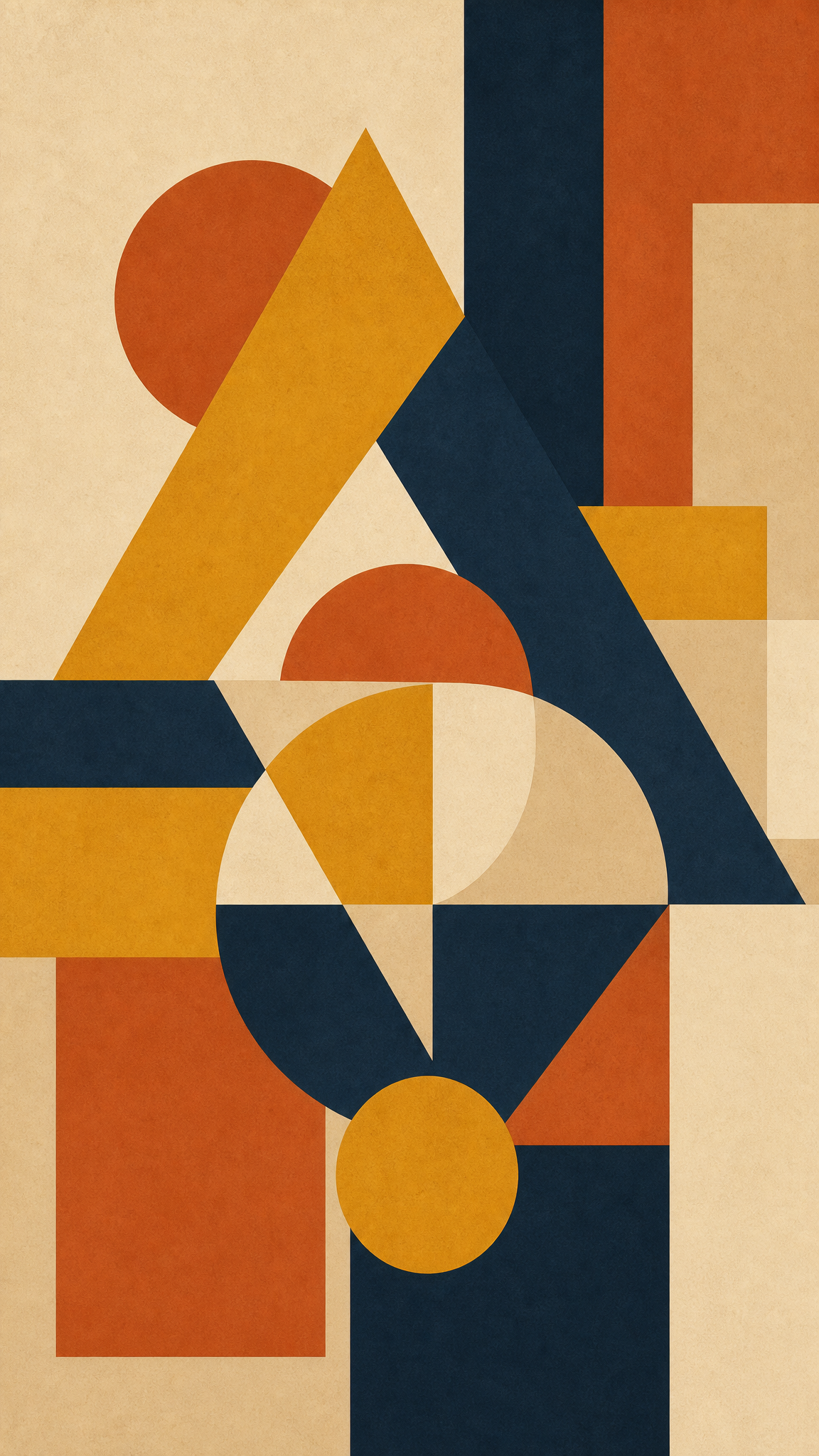
Geometric design is a style built from clear shapes, repeatable structures, and mathematical-looking layouts. In wallpaper terms, it favors circles, squares, triangles, grids, line systems, and pattern repetition over figurative storytelling. The appeal is clarity: geometric wallpapers feel ordered, graphic, modern, and scalable across desktop, phone, and ultrawide formats.
About Geometric Art
As a contemporary style label, geometric design is less a single movement than a recurring visual approach used across modern graphic design. Current design guides consistently describe it as work organized around basic forms, strong line systems, visual repetition, and precise composition. In practice, it overlaps with Bauhaus-derived clarity, modernist grids, logo systems, and abstract pattern design, but the geometric style tag itself is broader and more practical: if circles, squares, triangles, and clean alignment are the visual engine, the result usually reads as geometric.
Visual Traits
- Primary use of circles, squares, triangles, hexagons, arcs, and straight-line systems
- Clean edges, measured spacing, and clearly organized composition
- Repeatable patterns, tessellations, modular tile structures, or stripe systems
- Strong contrast between solid shape blocks and open negative space
- Grids, symmetry, or intentionally offset-but-balanced arrangements
- Sharp linework and mathematically clean proportions
- Limited palettes or tightly controlled high-contrast color systems
- Poster, branding, or wallpaper surfaces that read well even from a distance
- Abstract composition rather than figurative narrative illustration
- Scalability across aspect ratios because the language is pattern- and system-driven
Use Cases
Desktop wallpapers that need high legibility behind icons and windows
Phone lock screens with central symmetry or repeated pattern bands
Ultrawide displays where repeating modules can extend without losing structure
Professional setups that benefit from a clean, non-figurative background
Minimal or design-forward environments where order matters more than storytelling
Pattern-based wallpapers that need to crop cleanly across multiple screen ratios
Similar Styles
Different From
Prompt Guide
Prompt Directions
- Declare the visual system early: 'geometric wallpaper pattern,' 'precise geometric composition,' or 'abstract geometric layout'
- Name the shapes you want: circles, squares, triangles, diagonal line fields, concentric rings, checker modules, or tessellated tiles
- Specify the arrangement: 'grid-based,' 'symmetrical,' 'modular,' or 'offset but balanced'
- Control the palette tightly: black and white, primary colors, muted earth tones, or two-color contrast systems
- If you need icon-safe desktop results, ask for open negative space and reduced center clutter
- For wallpaper use, emphasize 'clean edges,' 'flat color blocks,' and 'high visual order'
Tips
- Internal editorial suggestion: A two- or three-color palette usually produces cleaner geometric results than a rainbow palette.
- Internal editorial suggestion: Concentric circles, diagonal stripe fields, and modular tile repeats are the most reliable wallpaper-safe geometric motifs.
- Internal editorial suggestion: If the result feels too decorative, simplify the shape count before changing the palette.
- Internal editorial suggestion: For ultrawide displays, repeating modules or long horizontal bands crop better than centered emblems.
Recommended Keywords
Avoid
Common Failures
- Too many shapes with no hierarchy — define one dominant system, then add one secondary motif
- Becoming generic abstract art — explicitly ask for precise geometry, alignment, and measured spacing
- Overusing gradients and effects — flat or tightly controlled color usually reads more authentically
- Losing wallpaper usability — leave breathing room and avoid filling every corner with detail
- Accidentally drifting into Memphis — reduce playful squiggles and keep the layout more disciplined